


Kalam Kitaab
Pinjar Novel (ਪਿੰਜਰ) Book – Amrita Pritam
Pinjar Novel (ਪਿੰਜਰ) Book – Amrita Pritam
Couldn't load pickup availability
Share
"Pinjar" is Amrita Pritam's iconic Punjabi novel that powerfully depicts the horrors of Partition violence, focusing on a Hindu woman's abduction and her struggle for identity, survival, and humanity amid communal madness. A landmark feminist and humanist work in Indian literature.
"ਪਿੰਜਰ" ਅੰਮ੍ਰਿਤਾ ਪ੍ਰੀਤਮ ਦਾ ਮਸ਼ਹੂਰ ਪੰਜਾਬੀ ਨਾਵਲ ਹੈ ਜੋ ਵੰਡ ਦੀ ਹਿੰਸਾ ਦੀਆਂ ਭਿਆਨਕਤਾਵਾਂ ਨੂੰ ਬਿਆਨ ਕਰਦਾ ਹੈ, ਇੱਕ ਹਿੰਦੂ ਔਰਤ ਦੇ ਅਗਵਾ ਅਤੇ ਫਿਰਕੂ ਪਾਗਲਪਨ ਵਿੱਚ ਪਛਾਣ, ਬਚਾਅ ਅਤੇ ਇਨਸਾਨੀਅਤ ਦੇ ਸੰਘਰਸ਼ ਨੂੰ ਫੜਦਾ ਹੈ। ਭਾਰਤੀ ਸਾਹਿਤ ਵਿੱਚ ਨਾਰੀਵਾਦੀ ਅਤੇ ਮਨੁੱਖਤਾਵਾਦੀ ਮੀਲ ਪੱਥਰ।
Book Title: ਪਿੰਜਰ (Pinjar)
Author: Amrita Pritam
Language: Punjabi (Gurmukhi)
Genre: Novel (Partition Literature)
Available at: Kalam Kitaab


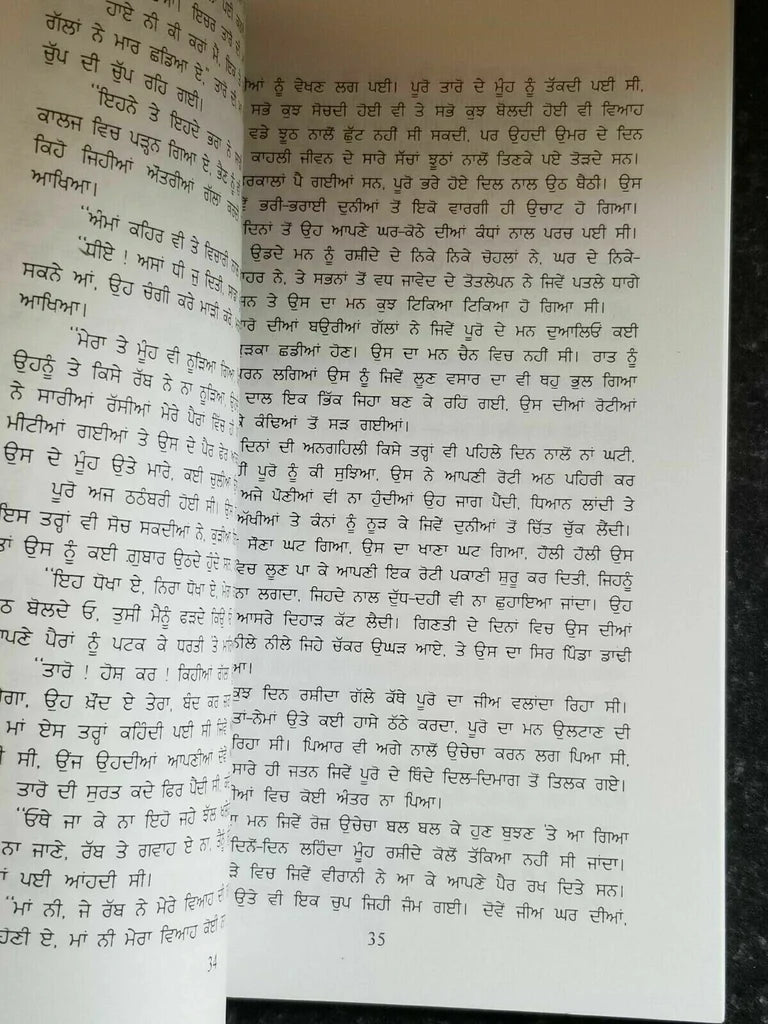
Pinjar by Amrita Pritam | A Timeless Punjabi Novel About Love, Humanity and Partition
Among all Amrita Pritam Books, Pinjar stands as her greatest literary achievement and one of the finest novels ever written in Punjabi literature. Since its publication in 1950, the novel has continued to move readers with its honest portrayal of love, identity, sacrifice, womanhood, and the devastating human cost of the Partition of India.
Unlike many historical novels that focus on kings, politicians, or battles, Pinjar tells the story of ordinary people whose lives are forever altered by extraordinary events. Through one woman's journey, Amrita Pritam explores what happens when identity, family, religion, and humanity collide during a period of immense social and political upheaval.
What makes Pinjar remarkable is that it never attempts to glorify conflict or assign simple labels of hero and villain. Instead, Amrita Pritam presents human beings with all their strengths, weaknesses, fears, and contradictions. Every major character carries emotional wounds, and every decision reflects the pressures of family, society, and history.
More than seventy years after it was first published, Pinjar remains one of the most widely read Punjabi Books in the world. It has been translated into numerous languages, adapted into a critically acclaimed film, and continues to be taught in universities as an essential work of Punjabi and South Asian literature.
For anyone beginning their journey through Amrita Pritam Books, Pinjar is the perfect place to start. It is not only her most celebrated novel but also one of the most emotionally powerful stories ever written in Punjabi.
Why Pinjar Is Considered Amrita Pritam's Masterpiece
Every great writer has one work that defines their legacy. For Amrita Pritam, that work is undoubtedly Pinjar. Although she wrote more than one hundred books, including novels, poetry, essays, memoirs, and autobiographies, it is Pinjar that introduced millions of readers to her extraordinary literary voice.
The novel has earned its reputation not simply because it is set during the Partition of India, but because it explores the emotional consequences of history with remarkable honesty and compassion. Rather than concentrating on political events or historical figures, Amrita Pritam asks readers to look at the ordinary men and women whose lives were shattered by circumstances beyond their control.
This human-centred approach makes Pinjar timeless. Readers from different countries, cultures, and generations continue to relate to its themes because the novel speaks about experiences that are universal—love, belonging, loss, hope, identity, and survival.
A Novel Beyond the History of Partition
Many people describe Pinjar as a Partition novel, but that description tells only part of the story.
Yes, the Partition of India forms the historical backdrop of the novel. However, Pinjar is ultimately about people rather than politics. It explores how ordinary lives are affected when hatred, revenge, and social divisions replace trust and compassion.
The novel asks difficult questions that remain relevant today.
What defines a person's identity?
Can society decide who belongs and who does not?
Is honour more important than humanity?
Can compassion survive violence?
These questions make Pinjar much more than a historical novel. It becomes a timeless exploration of the human condition.
A Story That Speaks Across Generations
One of the reasons readers continue recommending Pinjar decades after its publication is its emotional honesty.
Every generation experiences uncertainty, change, and difficult choices. Although the historical setting belongs to the 1940s, the emotions experienced by the characters remain familiar to modern readers.
This ability to connect across time is one of the greatest strengths of Amrita Pritam Books.
Understanding the Meaning of Pinjar
Before exploring the story itself, it is worth understanding the significance of the novel's title.
The Punjabi word "Pinjar" literally means "skeleton" or "cage." At first glance, the title appears unusual for a novel, but as readers progress through the story, its symbolic meaning becomes increasingly powerful.
The Symbolism Behind the Title
The "cage" in Pinjar exists on many levels.
It represents the physical body, but it also symbolizes the invisible prisons created by society. Throughout the novel, characters find themselves trapped by expectations they did not choose.
Some are imprisoned by family honour.
Some are imprisoned by revenge.
Some are imprisoned by religion.
Others are imprisoned by fear, tradition, or the weight of history itself.
Amrita Pritam uses this symbolism to show that human beings are often confined not by walls but by beliefs, customs, and circumstances that limit their freedom.
The Cage of Society
Perhaps the most important "cage" in the novel is the one created by society.
Long before Partition begins, characters are already living according to strict social rules. Marriage, honour, reputation, and family expectations shape nearly every decision they make.
Individuals rarely possess complete freedom to determine their own futures.
Women, in particular, carry the burden of preserving family honour. Their lives are often judged according to standards over which they have little control.
This social reality forms the emotional foundation of the novel and explains why the events that follow become so devastating.
The Historical Background of Pinjar
To fully appreciate the novel, readers should understand the historical world in which it is set.
Punjab Before 1947
Before the Partition of India, Punjab was home to people of many faiths who shared language, traditions, markets, festivals, and everyday life.
In many villages, Sikh, Hindu, and Muslim families had lived alongside one another for generations. Although differences existed, daily life was built upon cooperation, shared customs, and longstanding relationships.
Amrita Pritam carefully recreates this atmosphere in the opening chapters of Pinjar. Readers are introduced to a familiar world filled with family celebrations, village traditions, and ordinary routines.
This peaceful beginning is important because it allows readers to understand everything that will later be lost.
The Shadow of Partition
Although the early chapters focus on personal relationships, readers gradually sense that larger historical forces are approaching.
Political tensions are increasing across the subcontinent. Communities that once lived together peacefully are beginning to experience uncertainty and mistrust.
Rather than introducing these events dramatically, Amrita Pritam allows the tension to grow slowly, creating a powerful feeling that change is inevitable.
This quiet approach makes the later events even more emotionally impactful.
Amrita Pritam's Personal Connection
One reason Pinjar feels so authentic is that Amrita Pritam herself experienced Partition.
Born in Gujranwala, now in Pakistan, she was forced to leave her homeland during the upheaval of 1947. Like millions of others, she experienced displacement, uncertainty, and the emotional pain of leaving familiar places behind.
Instead of writing a political history, she transformed those experiences into literature.
Her goal was not simply to record events but to preserve the emotional truth of what ordinary people endured.
This personal connection gives Pinjar extraordinary sincerity and emotional depth.
The Beginning of the Story
One of Amrita Pritam's greatest strengths is the patience with which she introduces her characters.
Rather than beginning with dramatic conflict, she allows readers to enter the ordinary world of rural Punjab.
Introducing Puro
At the centre of the novel is Puro, one of the most unforgettable heroines in Punjabi literature.
When readers first meet her, Puro is simply a young woman looking forward to the future.
She is engaged to Ramchand, belongs to a respected family, and dreams of the ordinary happiness that many young women of her generation hoped to achieve through marriage and family life.
There is nothing extraordinary about her circumstances, and that is precisely why readers connect with her so quickly.
Puro represents thousands of young women whose futures appeared secure until history changed everything.
Puro's Family and Engagement
Puro's engagement to Ramchand symbolizes stability, hope, and the expectations of both families.
Preparations for marriage reflect the customs and traditions of Punjabi society, where weddings were not merely personal celebrations but important family events involving honour, reputation, and community relationships.
Amrita Pritam presents these traditions with warmth and realism, allowing readers to appreciate the life that Puro hopes to build.
The happiness surrounding her engagement makes the unfolding tragedy even more heartbreaking.
Family Honour and Tradition
One of the strongest influences in Puro's world is the concept of family honour.
Individual desires often take second place to social expectations. Families make decisions collectively, believing that personal sacrifice is necessary to preserve reputation and respect within the community.
Amrita Pritam neither romanticizes nor condemns these traditions outright. Instead, she portrays them honestly, allowing readers to understand both their cultural importance and their emotional consequences.
These ideas become increasingly significant as the novel progresses, shaping many of the choices made by its characters.
Amrita Pritam's Storytelling in the Opening Chapters
The opening chapters of Pinjar demonstrate why Amrita Pritam remains one of the greatest writers in Punjabi literature.
Her language is simple yet deeply expressive. She avoids unnecessary ornamentation, trusting emotions to emerge naturally through dialogue, silence, and everyday moments.
Rather than rushing toward dramatic events, she patiently builds emotional connections between readers and her characters. By the time the central conflict begins, readers already feel invested in Puro's dreams, relationships, and future.
This careful storytelling ensures that every later event carries genuine emotional weight.
By the end of the opening section, the peaceful world that Amrita Pritam has created begins to feel fragile. Readers sense that unseen forces are approaching—forces capable of changing not only Puro's life but the destiny of an entire generation.
The Turning Point in the Story
The peaceful world that Amrita Pritam carefully builds in the opening chapters does not remain untouched for long. Without warning, Puro's life changes in a way she could never have imagined. This turning point is not simply the beginning of the novel's conflict—it is the moment that transforms Pinjar from a story about one family into a profound exploration of identity, humanity, and survival.
Amrita Pritam does not rush through these events. Instead, she allows readers to experience every emotion alongside Puro. Fear, confusion, helplessness, hope, and despair unfold gradually, making the story feel painfully real.
Unlike many novels that depend on dramatic twists, Pinjar derives its power from the emotional consequences of each event. Every decision changes not only the direction of the story but also the lives of the characters forever.
Puro's Abduction
A Life Changed Forever
One day, while travelling through the countryside, Puro is abducted by Rashid. What initially appears to be a personal crime is gradually revealed to have much deeper roots.
Rashid's family believes they are taking revenge for an old dispute between their family and Puro's ancestors. A conflict that began years before either of them was born now determines the fate of an innocent young woman.
This idea is central to the novel.
Amrita Pritam shows how hatred can be inherited across generations. People often become prisoners of conflicts they never created, paying the price for decisions made long before they were born.
Puro has done nothing wrong, yet her future is suddenly stolen from her because of an ancient family feud.
This injustice immediately draws readers into her emotional world.
Rashid's Motivation
One of Amrita Pritam's greatest strengths is that she refuses to create one-dimensional characters.
At first, readers naturally see Rashid as the man responsible for destroying Puro's life. However, as the novel progresses, his character becomes increasingly complex.
Rashid is not portrayed as a cruel man who enjoys causing suffering. Instead, he is shown as someone trapped within expectations created by his family and community.
He believes he is fulfilling an obligation that has existed for generations.
This does not excuse his actions, but it helps readers understand how cycles of revenge continue from one generation to another.
Amrita Pritam asks readers to recognize that hatred rarely destroys only one life—it damages everyone who becomes part of it.
Puro's Escape
A Moment of Hope
Unable to accept her fate, Puro eventually finds an opportunity to escape and return home.
This section of the novel is filled with hope. Readers naturally expect that her family will embrace her and protect her after everything she has suffered.
Puro herself believes that once she reaches home, her nightmare will finally end.
She gathers her courage, makes the dangerous journey back, and arrives at the place she has always considered her safest refuge.
What follows becomes one of the most heartbreaking moments in Punjabi literature.
When Home No Longer Feels Like Home
Instead of welcoming her with open arms, Puro's family hesitates.
They love their daughter deeply, but they are terrified of what society will say.
Their greatest fear is not their daughter's suffering but the loss of family honour.
They worry that accepting her back will destroy the marriage prospects of other family members and bring shame upon the household.
Finally, they make a decision that changes Puro's life forever.
They refuse to take her back.
This moment is perhaps the emotional centre of the novel.
Amrita Pritam does not portray Puro's parents as heartless people.
Instead, she shows them as individuals trapped by social expectations that are stronger than parental love.
Readers experience conflicting emotions.
They sympathize with Puro's unimaginable pain.
They understand the fear felt by her parents.
At the same time, they question a society in which honour becomes more important than humanity.
The Real Meaning of Loss
Many readers believe that Pinjar is primarily about Partition.
In reality, Puro's greatest loss occurs before Partition officially begins.
She loses something far more fundamental than her home.
She loses certainty.
She loses the future she had imagined.
She loses the identity society had assigned to her.
Most painfully, she loses the belief that her family will always protect her.
From this point onward, Puro must begin constructing a completely new identity.
Her emotional journey becomes the true heart of the novel.
Puro's Transformation
From Victim to Survivor
One of the greatest achievements of Amrita Pritam is the way she develops Puro's character.
At the beginning of the novel, Puro is a young woman whose future has largely been planned by others.
As the story progresses, suffering gradually transforms her.
She does not suddenly become fearless.
She continues to experience sadness, loneliness, anger, and uncertainty.
Yet beneath these emotions, remarkable inner strength begins to emerge.
Instead of allowing tragedy to destroy her completely, she slowly learns how to continue living despite unbearable circumstances.
This transformation feels completely natural because Amrita Pritam develops it gradually rather than forcing dramatic changes.
Readers witness every stage of Puro's emotional growth.
Learning to Live Again
Returning to Rashid's home is one of the most emotionally complicated moments in the novel.
Puro is physically present, but emotionally she remains disconnected from everything around her.
Nothing feels familiar.
Nothing feels like home.
Her identity has been shattered.
Amrita Pritam beautifully captures the loneliness experienced by someone who no longer belongs anywhere.
Puro is rejected by the family into which she was born, yet she cannot immediately accept the life forced upon her.
She exists between two worlds without fully belonging to either.
This feeling of displacement later becomes one of the defining emotional themes of Partition itself.
Rashid's Character Development
More Than an Antagonist
As the novel progresses, Rashid becomes one of its most misunderstood characters.
Rather than presenting him as permanently cruel, Amrita Pritam gradually reveals his humanity.
He begins to understand the suffering he has caused.
He sees Puro's loneliness.
He recognizes that revenge has not brought honour or happiness.
Instead, it has imprisoned both of them.
Readers are not asked to forget his actions.
Instead, they are encouraged to consider how guilt, compassion, and regret can transform individuals.
This moral complexity is one reason why Pinjar continues to be studied in literature classrooms.
The Burden of Guilt
Throughout the novel, Rashid increasingly struggles with guilt.
He realizes that one act of revenge has destroyed multiple lives.
His own life no longer resembles the future he had imagined.
Amrita Pritam demonstrates that violence rarely creates winners.
Instead, it leaves emotional scars on everyone involved.
This balanced portrayal gives the novel remarkable psychological depth.
The Major Themes in Pinjar
One reason Pinjar remains one of the greatest Amrita Pritam Books is the richness of its themes.
Every chapter explores ideas that continue to resonate with readers today.
Identity
Perhaps the central question of the novel is:
Who am I when society refuses to recognize me?
Puro's struggle is not merely physical.
It is a struggle to understand who she has become after losing the identity she once believed was permanent.
Amrita Pritam reminds readers that identity is shaped not only by religion or family but also by personal experience and inner strength.
Womanhood
Women occupy the emotional centre of Pinjar.
Through Puro and other female characters, Amrita Pritam explores how women often bear the greatest burden during periods of social conflict.
They become symbols of honour.
They become victims of revenge.
They become responsible for preserving family reputation.
Yet despite these pressures, they also display extraordinary courage and resilience.
This perspective has made Pinjar one of the most important feminist novels in Punjabi literature.
Family Honour
Throughout the novel, honour repeatedly influences the decisions made by families.
Characters often sacrifice personal happiness in order to preserve social reputation.
Amrita Pritam never simplifies this issue.
Instead, she encourages readers to ask difficult questions.
Can honour exist without compassion?
Can traditions remain meaningful if they require the suffering of innocent people?
These questions remain relevant long after the novel ends.
Humanity Beyond Religion
Although the story unfolds during a period of increasing communal tension, Pinjar consistently emphasizes shared humanity.
Amrita Pritam avoids portraying entire religious communities as heroes or villains.
Instead, she focuses on individuals.
Kindness and cruelty exist within every community.
Compassion is shown to be stronger than hatred whenever people choose to see one another as human beings rather than religious identities.
This humanistic vision explains why the novel continues to resonate with readers from diverse backgrounds.
Forgiveness
Forgiveness in Pinjar is neither simple nor immediate.
Characters must confront pain, guilt, regret, and difficult memories before healing becomes possible.
Amrita Pritam portrays forgiveness not as forgetting the past but as refusing to allow hatred to determine the future.
This message remains one of the novel's most powerful lessons.
Amrita Pritam's Writing Style in Pinjar
One reason Pinjar has remained relevant for more than seven decades is Amrita Pritam's extraordinary literary style.
She writes with remarkable simplicity.
Her language is elegant without becoming complicated.
Every sentence feels natural, allowing emotions to emerge through conversations, silence, and ordinary moments rather than dramatic speeches.
Emotional Realism
Instead of exaggerating feelings, Amrita Pritam trusts readers to experience emotions for themselves.
A quiet conversation often reveals more than pages of description.
A single gesture communicates love more effectively than elaborate declarations.
This restraint gives the novel lasting emotional power.
Psychological Depth
Rather than focusing only on external events, Amrita Pritam explores the thoughts, fears, hopes, and doubts of her characters.
Readers understand not only what people do but also why they make those choices.
This psychological realism makes every character feel authentic.
Symbolism
Throughout Pinjar, everyday objects, landscapes, homes, and journeys carry symbolic meaning.
Most importantly, the title itself becomes a metaphor for lives trapped by revenge, honour, history, and social expectations.
These symbols add richness to the novel without making it difficult to understand.
A World Moving Towards Partition
As the novel progresses, personal tragedy gradually merges with historical tragedy.
The emotional wounds experienced by Puro begin to mirror the wounds that soon spread across Punjab itself.
Families become divided.
Communities begin to distrust one another.
The peaceful villages introduced at the beginning of the novel slowly move toward uncertainty and fear.
Amrita Pritam masterfully connects one woman's story with the destiny of an entire region, preparing readers for the heartbreaking events that follow.
By the end of this section, Pinjar is no longer simply the story of Puro.
It has become the story of Punjab itself—a land struggling to preserve its humanity as history moves toward one of its darkest moments.
The Partition of India Arrives
Until this point in the novel, Puro's suffering has been deeply personal. She has lost her home, her family, and the future she once imagined. However, as the story progresses, Amrita Pritam broadens the narrative. The pain experienced by one woman becomes the pain of an entire land.
The Partition of India in 1947 transforms Punjab into a region filled with uncertainty, fear, and violence. Villages that had once lived together peacefully begin to fall apart. Neighbours who had shared festivals, markets, and daily life suddenly find themselves divided by religion and politics.
Amrita Pritam does not attempt to describe every historical event. Instead, she focuses on the emotional consequences of Partition. She reminds readers that history is not only created by governments or political leaders—it is experienced by ordinary people who suddenly lose everything they have ever known.
Families are separated.
Children become orphaned.
Homes are abandoned.
Friendships disappear.
Communities that had existed for centuries are torn apart almost overnight.
Through Puro's eyes, readers witness not simply a historical event but the emotional collapse of an entire society.
Partition Through Human Eyes
Beyond Politics
Many books explain why Partition happened.
Pinjar explains what it felt like.
This is one of the greatest achievements of the novel.
Amrita Pritam never turns the story into a political argument. Instead, she asks readers to consider the human cost of communal hatred.
The novel shows that suffering did not belong to one religion alone.
Hindus suffered.
Muslims suffered.
Sikhs suffered.
Women, children, and ordinary families paid the highest price.
This balanced human perspective has made Pinjar one of the most respected works of Partition literature.
Women and the Tragedy of Partition
One of the most powerful aspects of Pinjar is its portrayal of women during Partition.
Historical accounts tell us about migration, political negotiations, and violence. Amrita Pritam focuses on something history books often mention only briefly—the experiences of women.
Many women lost their homes.
Many were separated from their families.
Some were abducted.
Others faced impossible choices about identity, marriage, and belonging.
Through Puro and several supporting characters, Amrita Pritam gives these women voices, emotions, and dignity.
She reminds readers that women were not merely victims of history.
They were individuals with hopes, fears, courage, and extraordinary resilience.
This perspective makes Pinjar one of the earliest and most influential feminist novels in Punjabi literature.
The Emotional Climax of the Novel
As violence spreads across Punjab, Puro's understanding of herself also changes.
The frightened young woman introduced at the beginning of the novel gradually becomes someone capable of making difficult moral decisions.
Her suffering teaches her compassion rather than hatred.
Instead of allowing revenge to define her life, she begins to recognize the shared humanity that exists even in times of conflict.
This emotional transformation represents one of Amrita Pritam's greatest literary achievements.
Puro does not become fearless.
She does not forget her past.
She does not suddenly stop grieving.
Instead, she learns to live with her memories while refusing to allow bitterness to consume her.
This quiet inner strength is what makes her one of the greatest heroines in Punjabi literature.
The Ending of Pinjar (Spoiler Warning)
Spoiler Alert: The following section discusses the ending of the novel.
Near the conclusion of Pinjar, opportunities arise that could allow Puro to return permanently to the family and life she once desired.
Earlier in the novel, this possibility would have represented the fulfilment of every dream she held.
However, the experiences she has endured have transformed her completely.
She has witnessed unimaginable suffering.
She has experienced rejection from those she loved most.
She has seen how hatred destroys individuals and entire communities.
When faced with a life-changing decision, Puro chooses compassion over personal desire.
Rather than simply reclaiming the identity she once had, she chooses a path shaped by empathy, responsibility, and humanity.
The ending surprises many readers because it avoids conventional notions of victory or defeat.
Instead, Amrita Pritam presents a conclusion that feels emotionally truthful.
Puro's decision reflects the central message of the novel—that humanity is greater than revenge, and compassion is stronger than hatred.
The ending continues to generate discussion among readers and literary scholars because it refuses easy answers.
The Literary Significance of Pinjar
Few novels have influenced Punjabi literature as deeply as Pinjar.
Since its publication, it has become one of the defining works of modern Punjabi fiction.
The novel changed how writers approached historical events.
Rather than presenting history through rulers and battles, Amrita Pritam demonstrated that the experiences of ordinary people could reveal even greater truths.
Her focus on women's perspectives also transformed Punjabi literature.
She showed that women's emotional lives deserved the same literary attention traditionally given to male protagonists.
Today, Pinjar is widely studied in universities across India and abroad as part of courses on Punjabi literature, feminist literature, South Asian fiction, and Partition studies.
Its influence extends far beyond literature.
The novel continues to shape discussions about identity, gender, memory, migration, and reconciliation.
Amrita Pritam's Writing Style in Pinjar
Although every Amrita Pritam Book possesses its own unique qualities, many readers believe that Pinjar represents the finest example of her literary style.
Simplicity That Carries Great Emotional Power
Amrita Pritam never relies on unnecessarily complicated language.
Her prose is graceful, clear, and accessible.
Even readers who are new to Punjabi literature find themselves immersed in the story because the language feels natural and sincere.
Behind this apparent simplicity lies extraordinary literary craftsmanship.
Every sentence contributes to the emotional rhythm of the novel.
Characters That Feel Real
One of the reasons readers remember Pinjar for years after finishing it is the authenticity of its characters.
Puro feels like a real person.
Rashid feels like a real person.
Even minor characters possess emotional depth.
Nobody exists merely to advance the plot.
Instead, every individual reflects the social realities of Punjab during that period.
Humanity Instead of Judgement
Another remarkable feature of Amrita Pritam's writing is her refusal to judge her characters too quickly.
She encourages readers to understand people before condemning them.
This compassionate perspective distinguishes Pinjar from many historical novels that divide characters into heroes and villains.
Instead, Amrita Pritam reminds readers that history is often more complicated than simple moral categories.
Themes That Continue to Resonate Today
Although Pinjar is set during the 1940s, its themes remain remarkably relevant.
Readers continue to connect with the novel because it explores questions that every generation must confront.
Identity and Belonging
What truly defines a person's identity?
Is it religion?
Family?
Nationality?
Or the choices we make throughout life?
These questions remain central to the novel.
The Meaning of Freedom
Throughout Pinjar, characters struggle not only for physical freedom but also for emotional and psychological freedom.
Amrita Pritam suggests that true freedom begins when individuals refuse to let hatred determine their future.
Compassion in Difficult Times
Perhaps the greatest lesson offered by the novel is the importance of compassion.
Even during periods of violence and division, acts of kindness retain the power to restore hope.
This message explains why readers continue to recommend Pinjar around the world.
The Film Adaptation
The enduring popularity of Pinjar led to its adaptation into a feature film in 2003.
Directed by Chandra Prakash Dwivedi, the film brought Amrita Pritam's story to a wider audience while remaining closely connected to the emotional core of the novel.
The performances of Urmila Matondkar as Puro and Manoj Bajpayee as Rashid received widespread appreciation for capturing the emotional complexity of the original characters.
Although every film adaptation necessarily differs from its source, many readers discover the novel after watching the film and soon realize that the book provides even greater psychological depth and emotional richness.
Who Should Read Pinjar?
Pinjar is a novel that appeals to a wide variety of readers.
It is especially recommended for:
Readers of Punjabi Literature
Anyone interested in classic Punjabi fiction should place Pinjar at the top of their reading list.
Readers Interested in Partition Literature
Alongside other important works about Partition, Pinjar offers one of the most compassionate and emotionally powerful perspectives on this defining historical event.
Students and Researchers
The novel remains essential reading for students of Punjabi literature, South Asian history, feminist studies, and modern Indian literature.
Its literary depth makes it suitable for both academic study and personal reading.
Readers Who Enjoy Character-Driven Fiction
If you enjoy novels that focus on emotional growth rather than fast-paced action, Pinjar will leave a lasting impression.
Its strength lies in its unforgettable characters and timeless themes.
Why Pinjar Remains Relevant Today
More than seven decades after its publication, Pinjar continues to speak to readers because it explores issues that remain relevant across the world.
Questions about identity, migration, prejudice, belonging, women's rights, forgiveness, and humanity continue to shape modern societies.
Amrita Pritam reminds us that history should not simply be remembered—it should be understood.
By understanding the suffering of previous generations, readers can better appreciate the importance of compassion, tolerance, and mutual respect in the present.
This timeless message explains why Pinjar continues to be regarded as one of the greatest Amrita Pritam Books and one of the most important Punjabi Books ever written.
Final Thoughts on Pinjar by Amrita Pritam
Reading Pinjar is far more than reading a novel. It is an emotional journey through one of the most significant periods in the history of Punjab and the Indian subcontinent. Through the unforgettable character of Puro, Amrita Pritam gives voice to countless people whose lives were transformed by Partition, while also reminding readers that compassion and humanity can endure even in the darkest of times.
Whether you are discovering Amrita Pritam for the first time or revisiting one of her greatest works, Pinjar remains an essential addition to every collection of Amrita Pritam Books. Its unforgettable characters, profound themes, elegant writing, and enduring relevance ensure that each new generation finds fresh meaning within its pages.
If you are looking for Punjabi Novels that combine literary excellence, historical significance, and emotional depth, Pinjar deserves to be one of your first choices. It is not merely a classic of Punjabi literature—it is a timeless masterpiece that continues to inspire readers, scholars, and lovers of literature around the world.