

Kalam Kitaab
ਮੁਹੱਬਤ ਦੇ ਚਾਲੀ ਨੇਮ (Mohabbat De Chali Nem) (The Forty Rules of love Punjabi Edition) – Elif Shafak
ਮੁਹੱਬਤ ਦੇ ਚਾਲੀ ਨੇਮ (Mohabbat De Chali Nem) (The Forty Rules of love Punjabi Edition) – Elif Shafak
Couldn't load pickup availability
Share
"ਮੁਹੱਬਤ ਦੇ ਚਾਲੀ ਨੇਮ" Elif Shafak ਦੀ ਵਿਸ਼ਵ ਪ੍ਰਸਿੱਧ ਨਾਵਲ "The Forty Rules of Love" ਦਾ ਪੰਜਾਬੀ ਅਨੁਵਾਦ ਹੈ ਜੋ ਰੂਮੀ ਅਤੇ ਸ਼ਮਸ ਤਬਰੇਜ਼ੀ ਦੀ ਰੂਹਾਨੀ ਮੁਹੱਬਤ ਦੀ ਕਹਾਣੀ ਰਾਹੀਂ ਪਿਆਰ ਦੇ 40 ਨੇਮਾਂ ਨੂੰ ਬਿਆਨ ਕਰਦੀ ਹੈ। ਇਹ ਨਾਵਲ ਆਧੁਨਿਕ ਅਤੇ ਮੱਧਕਾਲੀ ਕਹਾਣੀਆਂ ਨੂੰ ਜੋੜ ਕੇ ਰੂਹਾਨੀ ਜਾਗਰੂਕਤਾ ਅਤੇ ਸੱਚੇ ਪਿਆਰ ਦੀ ਖੋਜ ਕਰਦੀ ਹੈ।
"ਮੁਹੱਬਤ ਦੇ ਚਾਲੀ ਨੇਮ" ਏਲਿਫ ਸ਼ਫਾਕ ਦੀ ਮਸ਼ਹੂਰ ਨਾਵਲ "The Forty Rules of Love" ਦਾ ਪੰਜਾਬੀ ਅਨੁਵਾਦ ਹੈ ਜੋ ਰੂਮੀ ਅਤੇ ਸ਼ਮਸ ਤਬਰੇਜ਼ੀ ਦੀ ਆਤਮਿਕ ਪਿਆਰ ਦੀ ਕਹਾਣੀ ਰਾਹੀਂ ਪਿਆਰ ਦੇ 40 ਨਿਯਮਾਂ ਨੂੰ ਪੇਸ਼ ਕਰਦੀ ਹੈ। ਇਹ ਆਧੁਨਿਕ ਅਤੇ 13ਵੀਂ ਸਦੀ ਦੀਆਂ ਕਹਾਣੀਆਂ ਨੂੰ ਮਿਲਾ ਕੇ ਰੂਹਾਨੀ ਜਾਗਰਣ ਅਤੇ ਅਸਲ ਪਿਆਰ ਦੀ ਭਾਲ ਨੂੰ ਉਜਾਗਰ ਕਰਦੀ ਹੈ।
Book Title: ਮੁਹੱਬਤ ਦੇ ਚਾਲੀ ਨੇਮ (Muhabbat De Chali Nem)
Author: Elif Shafak
Language: Punjabi (Gurmukhi)
Genre: Novel (Spiritual/Romance)
Available at: Kalam Kitaab
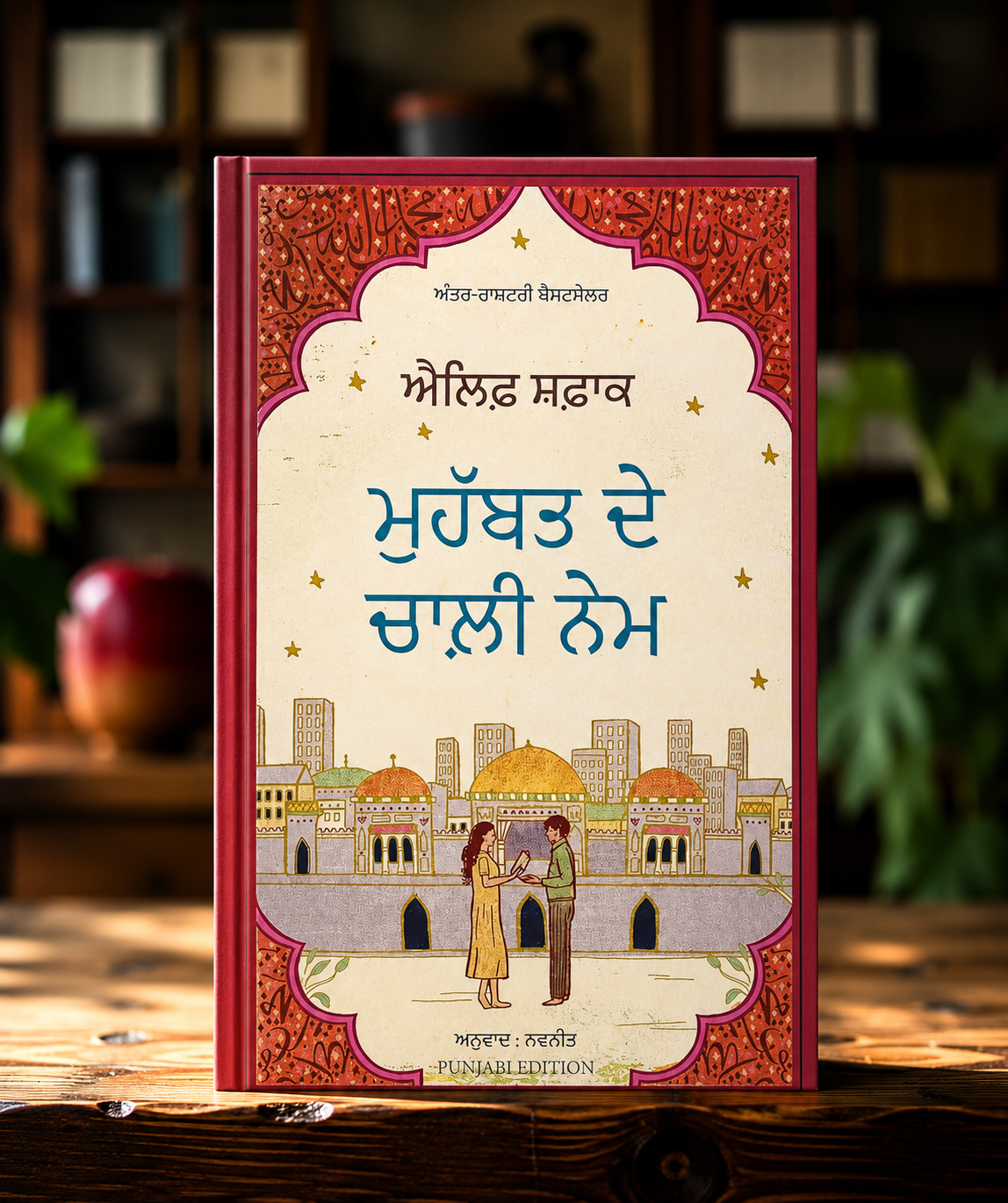
Mohabbat De Chali Name Book – A Timeless Story of Love, Spirituality, and Self-Discovery
Introduction
The Mohabbat De Chali Name Book is the Punjabi translation of The Forty Rules of Love, the internationally acclaimed Novel by Elif Shafak. More than just a bestselling work of fiction, this novel is a profound exploration of love, spirituality, faith, and personal transformation. It beautifully combines history with contemporary life, presenting readers with a story that is both emotionally touching and spiritually enlightening.
Unlike ordinary romance novels, the Mohabbat De Chali Name Book explores love in its highest and purest form. It teaches that love is not merely an emotion shared between two individuals but a powerful force capable of transforming one's heart, mind, and soul. Throughout the novel, readers are encouraged to question their beliefs, embrace compassion, overcome prejudice, and discover the deeper meaning of life.
What makes this book even more special is its ability to connect readers from different cultures and backgrounds. Although its roots lie in Sufi philosophy and Islamic mysticism, the messages it conveys are universal. Themes such as kindness, forgiveness, acceptance, patience, and self-discovery resonate with readers regardless of their religion or beliefs.
For Punjabi readers, the Mohabbat De Chali Name Book offers the opportunity to experience one of the world's most influential novels in their native language. The translation retains the emotional richness, poetic beauty, and philosophical depth of the original work, allowing readers to fully immerse themselves in the unforgettable journey created by Elif Shafak.
Whether you are a fan of literary fiction, historical novels, spiritual books, or stories that inspire personal growth, the Mohabbat De Chali Name Book is a remarkable read that continues to leave a lasting impression long after the final page.
About the Author – Elif Shafak
Elif Shafak is one of the most celebrated contemporary authors, known for her ability to blend history, culture, philosophy, and human emotions into compelling stories. Born in France and raised in Turkey, she has written numerous internationally bestselling novels that have been translated into more than fifty languages.
Her writing often explores themes such as identity, migration, women's experiences, spirituality, memory, and cultural diversity. Instead of presenting history as a collection of facts, Elif Shafak brings historical figures to life by exploring their emotions, struggles, and personal journeys.
Among all her works, The Forty Rules of Love is considered one of her most influential novels. It introduced millions of readers to the fascinating world of Sufi mysticism through the legendary friendship between the great Persian poet Jalaluddin Rumi and the wandering dervish Shams of Tabriz.
One of Elif Shafak's greatest strengths as a writer is her balanced storytelling. She never forces her beliefs upon readers. Instead, she invites them to think, reflect, and arrive at their own understanding of love, faith, and humanity. This thoughtful approach is one of the main reasons why the Mohabbat De Chali Name Book continues to inspire readers around the world.
About the Mohabbat De Chali Name Book
The Mohabbat De Chali Name Book is far more than the Punjabi translation of a globally acclaimed novel. It is a literary journey that combines historical fiction, spiritual philosophy, emotional storytelling, and timeless wisdom into a single unforgettable narrative.
At its heart, the novel explores one fundamental question:
What is true love?
Instead of offering a simple answer, Elif Shafak takes readers on two parallel journeys separated by more than seven hundred years. One story unfolds in the modern world, while the other transports readers to the thirteenth century, where one of history's most extraordinary spiritual friendships changed the course of literature and Islamic mysticism forever.
The beauty of the Mohabbat De Chali Name Book lies in the way these two stories complement each other. As readers move between the past and the present, they discover that the search for love, meaning, and inner peace remains the same regardless of time or place.
The novel gently encourages readers to reflect upon questions such as:
- Can love truly transform a person's life?
- Is spiritual wisdom gained through books alone, or through experience?
- How do we overcome fear, ego, and attachment?
- What does it mean to surrender to divine love?
- Can a single meeting change the direction of an entire life?
Rather than answering these questions directly, the novel allows readers to discover the answers through the experiences of its unforgettable characters.
A Unique Story Told Through Two Timelines
One of the defining features of the Mohabbat De Chali Name Book is its innovative narrative structure. Instead of following a single storyline, Elif Shafak masterfully weaves together two separate narratives that gradually become deeply interconnected.
The first story takes place in the present day and follows Ella Rubinstein, a forty-year-old homemaker living in America. From the outside, Ella appears to have everything she could want—a comfortable home, a stable marriage, healthy children, and financial security. Yet beneath this seemingly perfect life lies a growing sense of emptiness.
The second story transports readers to thirteenth-century Konya, where Jalaluddin Rumi is one of the most respected scholars of his time. Revered for his knowledge of religion and admired by countless students, Rumi enjoys immense respect within his community. However, despite his scholarship, he has not yet experienced the profound spiritual transformation that will eventually make him one of the greatest poets in history.
These two seemingly unrelated stories are connected through a manuscript that Ella is asked to review. As she begins reading the story of Rumi and Shams of Tabriz, she finds herself becoming emotionally invested in the characters. Gradually, the lessons contained within the manuscript begin influencing the way she views her own life.
This dual narrative keeps readers constantly engaged. Every chapter shifts between the historical and modern worlds, revealing striking similarities between the struggles faced by people separated by centuries.
Ella Rubinstein – A Woman Searching for Meaning
Ella Rubinstein is introduced as an ordinary woman whose life has become defined by routine. For many years, she has devoted herself to caring for her family, often placing the needs of others before her own. Although she has fulfilled the roles expected of her, she quietly feels that something important is missing.
Her marriage has lost its warmth, daily conversations have become predictable, and life seems to follow the same pattern every day. She no longer remembers the excitement, curiosity, and hope that once inspired her.
Seeking a new purpose, Ella accepts a position as a reader for a literary agency. Her first assignment is to evaluate a manuscript written by an unknown author named Aziz Zahara.
At first, she expects it to be just another novel.
Instead, she discovers a story unlike anything she has ever read.
The manuscript introduces her to the remarkable friendship between Rumi and Shams of Tabriz, and from the very first chapters, Ella realizes that this is not merely a historical tale. It is a story filled with wisdom that begins challenging her own assumptions about love, marriage, faith, and happiness.
As she continues reading, she slowly starts questioning the life she has accepted for so many years. The manuscript becomes more than a book—it becomes a mirror reflecting truths she has never dared to confront.
Preparing Readers for an Extraordinary Journey
The opening chapters of the Mohabbat De Chali Name Book deliberately move at a gentle pace. Rather than relying on dramatic events, Elif Shafak focuses on building emotional depth and encouraging readers to connect with the inner lives of her characters.
This slow and thoughtful beginning serves an important purpose. It prepares readers for a novel that is not simply about what happens to its characters but about how those experiences transform them from within.
Ella's quiet dissatisfaction with her ordinary life mirrors the spiritual restlessness that many people experience but rarely acknowledge. At the same time, the introduction of Rumi hints that even the wisest individuals have more to learn. These parallel journeys establish one of the novel's central ideas: true transformation begins when we become willing to question ourselves.
By the end of the opening section, readers are left with a sense of curiosity and anticipation. They know that Ella's life is about to change, and they sense that Rumi's encounter with Shams will become one of the most significant moments in literary and spiritual history.
This carefully crafted beginning draws readers into a story that gradually unfolds into a profound meditation on love, faith, friendship, and the lifelong search for meaning.
In the next part, we will explore the arrival of Shams of Tabriz, his unforgettable meeting with Rumi, the famous Forty Rules of Love, and the extraordinary friendship that transforms both their lives forever.
Mohabbat De Chali Name Book – The Extraordinary Friendship Between Rumi and Shams
The Arrival of Shams of Tabriz
As Ella Rubinstein becomes increasingly absorbed in the manuscript, the historical narrative introduces one of the most remarkable characters in the Mohabbat De Chali Name Book—Shams of Tabriz. He is not a king, a famous scholar, or a wealthy merchant. Instead, he is a wandering dervish who owns very little in terms of material possessions but possesses extraordinary spiritual insight.
Shams is portrayed as a man who values truth above popularity. He refuses to follow traditions simply because society expects him to, and he never hesitates to challenge hypocrisy, pride, or blind faith. His words are often uncomfortable because they force people to question long-held beliefs, yet they are always rooted in compassion and a sincere desire to help others discover the Divine.
Unlike many religious scholars of his time, Shams believes that knowledge alone cannot lead a person to God. Books, sermons, and rituals are valuable, but without love, humility, and self-awareness they remain incomplete. According to him, the heart must awaken before true wisdom can be attained.
For years, Shams has travelled from one city to another, praying that God will guide him to someone capable of understanding his teachings. He believes that every soul has a purpose, and he patiently waits for the companion destined to continue his spiritual journey.
That companion is Jalaluddin Rumi.
Rumi Before Meeting Shams
Before Shams enters his life, Rumi is already one of the most respected religious scholars in Konya. His lectures attract hundreds of students, his opinions are valued by rulers and ordinary people alike, and his reputation as a learned man continues to grow.
To everyone around him, Rumi seems to have achieved everything a scholar could hope for. He is admired, respected, and deeply knowledgeable about religion. However, Elif Shafak subtly suggests that although Rumi possesses immense learning, he has yet to experience the transforming power of divine love.
His understanding of faith is largely intellectual. He can explain religious teachings with great clarity, but he has not yet encountered the spiritual experience that transcends words and theories.
This distinction between knowledge and wisdom becomes one of the novel's most important ideas. The Mohabbat De Chali Name Book repeatedly reminds readers that learning is valuable, but genuine transformation comes when knowledge reaches the heart.
The Historic Meeting That Changed Everything
The meeting between Rumi and Shams is one of the defining moments of the novel. Elif Shafak recreates this legendary encounter with great emotional depth, presenting it as a meeting that had been destined long before either man realised it.
When Shams approaches Rumi, he does not greet him with admiration or praise. Instead, he asks a question so profound that it immediately captures Rumi's attention. Rather than discussing religious law or scholarly achievements, Shams challenges him to think beyond conventional understanding and to experience God through love rather than through intellect alone.
Their conversation is not a debate in which one person seeks to prove the other wrong. It is the beginning of a spiritual dialogue that transforms both teacher and student. Each recognises something extraordinary in the other.
Shams sees in Rumi the soul he has spent years searching for.
Rumi recognises in Shams a guide unlike any he has ever met.
From that moment onward, their lives become inseparable.
A Friendship That Transforms the Soul
As days turn into weeks, Rumi and Shams spend countless hours together discussing faith, love, destiny, compassion, and the mysteries of existence. Their conversations extend far beyond theology. They explore the human heart, the nature of suffering, and the path towards inner peace.
Gradually, Rumi begins to change.
The famous scholar who once devoted most of his time to teaching now spends long hours in contemplation with Shams. His priorities shift from public recognition to personal transformation. Instead of merely explaining religious truths, he begins living them.
Elif Shafak beautifully illustrates that this transformation is not sudden. It happens slowly through friendship, honest conversation, and the willingness to question deeply held assumptions.
This friendship becomes the emotional centre of the Mohabbat De Chali Name Book. It demonstrates that sometimes the greatest teachers are not those who provide answers but those who inspire us to ask better questions.
The Forty Rules of Love
One of the most memorable aspects of the novel is the collection of spiritual teachings known as the Forty Rules of Love. Rather than presenting them as strict commandments, Elif Shafak introduces each rule naturally through the experiences of the characters.
These rules encourage readers to reflect on their own lives and relationships. They are not limited to one religion or culture but speak to universal aspects of the human experience.
Some of the most powerful ideas found throughout the novel include:
True love begins with knowing oneself before trying to change others.
Every human being carries both light and darkness, and accepting both is part of spiritual growth.
The journey towards God is guided as much by love and compassion as by discipline and knowledge.
People should never judge others solely by outward appearances, because every individual is fighting unseen battles.
Life's greatest challenges often become the doorway to its greatest blessings.
These teachings are woven into the narrative rather than presented as lectures, making them easy to understand and deeply memorable.
Opposition and Misunderstanding
As Rumi's transformation becomes more visible, not everyone celebrates the changes taking place.
Many of his students begin to feel neglected. They struggle to understand why their respected teacher now spends so much time with a wandering dervish whom society views with suspicion. Rumours spread quickly throughout Konya, and some people begin questioning Shams' intentions.
Jealousy soon gives way to hostility.
Those who once admired Rumi fear that Shams has influenced him too deeply. Instead of recognising the positive transformation taking place, they interpret it as a rejection of tradition.
Elif Shafak explores an important truth through these conflicts. Throughout history, people have often resisted individuals who challenge established ways of thinking. New ideas can be inspiring, but they can also provoke fear in those who prefer certainty over change.
The tension surrounding Rumi and Shams grows steadily, creating an atmosphere that foreshadows the emotional events to come.
Memorable Supporting Characters
Another reason why the Mohabbat De Chali Name Book is so captivating is its rich cast of supporting characters. Each person contributes a different perspective on love, faith, and human nature.
Rumi's family members struggle to understand his changing priorities. His students experience feelings of admiration, confusion, and jealousy. Merchants, travellers, scholars, and ordinary townspeople all respond differently to Shams' presence.
Even characters who appear only briefly leave a lasting impression because Elif Shafak gives each of them a unique voice and emotional depth. No one is portrayed as completely perfect or entirely evil. Instead, every character reflects different aspects of human nature—hope, fear, pride, compassion, insecurity, and forgiveness.
This multi-layered storytelling makes the novel feel realistic and emotionally engaging.
Ella's Emotional Awakening
While the historical story unfolds in Konya, Ella Rubinstein finds herself undergoing a transformation of her own.
The manuscript no longer feels like a work of fiction. The conversations between Rumi and Shams begin influencing the way she views her own life, marriage, and relationships.
Curious about the author of the manuscript, Aziz Zahara, Ella contacts him with questions about his work. What begins as a professional exchange gradually develops into meaningful conversations about literature, spirituality, happiness, and the purpose of life.
For the first time in many years, Ella feels truly heard.
Their correspondence awakens emotions she believed had disappeared forever. She begins questioning whether the comfortable but emotionally distant life she has accepted is the life she genuinely wants.
Through Ella's journey, Elif Shafak reminds readers that transformation is not limited by age. No matter how settled life may seem, it is always possible to rediscover hope, purpose, and the courage to change.
Love Beyond Romance
One of the greatest strengths of the Mohabbat De Chali Name Book is its broad understanding of love.
While romantic love certainly has an important place in the story, the novel presents many other forms of love that are equally powerful.
It celebrates the love between teacher and student, the loyalty shared by true friends, the compassion shown to strangers, the forgiveness offered to those who have caused pain, and above all, the longing of the human soul to connect with the Divine.
By expanding the meaning of love beyond romance, Elif Shafak creates a story that speaks to readers of every age and background.
As this part of the novel draws to a close, both storylines reach a turning point. The friendship between Rumi and Shams faces growing opposition, while Ella finds herself standing at the threshold of a life-changing decision. The final chapters of the Mohabbat De Chali Name Book bring these parallel journeys together in a deeply moving conclusion that explores loss, transformation, faith, and the enduring power of love.
Mohabbat De Chali Name Book – Why This Novel Continues to Inspire Millions
The Emotional Conclusion of the Story
As the story moves towards its conclusion, the friendship between Rumi and Shams faces increasing opposition. Many people in Konya cannot understand the extraordinary bond between the two men. They see only the outward changes in Rumi's behaviour and fail to recognise the spiritual transformation taking place within him.
Shams has always understood that every meaningful journey demands sacrifice. Throughout the novel, he reminds readers that love is not always comfortable. Genuine love asks people to let go of pride, fear, attachment, and the desire for approval. It encourages them to become their most authentic selves, even when doing so attracts criticism.
Eventually, Shams disappears under mysterious circumstances. Historians have debated his fate for centuries, and Elif Shafak deliberately preserves that mystery rather than presenting a single definitive version of events. Whether readers interpret his disappearance as tragedy, destiny, or spiritual symbolism, its impact on Rumi is undeniable.
The loss of Shams becomes one of the most painful moments in Rumi's life. Yet it is through this pain that he reaches his greatest spiritual awakening. Instead of allowing grief to destroy him, Rumi transforms it into wisdom, compassion, and poetry. His longing for his beloved friend becomes a longing for the Divine, and from this transformation emerge the verses that would make him one of the most celebrated poets in history.
The novel beautifully suggests that although Shams leaves the physical world, his teachings continue to live within Rumi. Their friendship proves that true love does not end with separation. It continues to shape the heart long after two people are no longer together.
Ella Rubinstein's Journey Towards a New Life
The modern storyline reaches an equally emotional conclusion.
Through reading the manuscript and exchanging thoughtful conversations with Aziz Zahara, Ella Rubinstein gradually realises that she has spent years living according to expectations rather than following her own heart. She begins to recognise that a comfortable life without emotional fulfilment is not the same as a meaningful life.
Her growing friendship with Aziz becomes an opportunity for self-discovery rather than simply a romantic relationship. He encourages her to question old assumptions, embrace uncertainty, and accept that change is an essential part of personal growth.
Ella also learns that Aziz is living with a serious illness. This revelation reminds both Ella and the reader that life is fragile and unpredictable. Love cannot always promise permanence, but it can offer honesty, courage, and transformation.
By the end of the novel, Ella has changed profoundly. She is no longer defined by routine or fear of judgement. She has found the courage to make decisions based on truth rather than habit, accepting that every meaningful choice involves risk.
Her story mirrors Rumi's journey in a modern context. Both characters discover that true transformation begins when they allow love to challenge everything they previously believed about themselves.
The Deeper Meaning Behind the Mohabbat De Chali Name Book
One reason the Mohabbat De Chali Name Book has remained relevant for readers across the world is that it operates on multiple levels.
On the surface, it is an engaging historical novel intertwined with a contemporary love story.
On a deeper level, it is a meditation on spirituality, identity, forgiveness, and the human search for meaning.
The novel encourages readers to look beyond labels, appearances, and social expectations. It asks whether knowledge without compassion has any real value and whether genuine faith can exist without humility.
Throughout the story, Elif Shafak reminds us that every individual is travelling their own spiritual path. No two journeys are identical, yet all are connected by the universal desire to find peace, purpose, and love.
This layered storytelling allows different readers to take away different lessons depending on their own experiences and stage of life.
Themes That Make the Novel Timeless
Love as a Force for Transformation
The central message of the Mohabbat De Chali Name Book is that love transforms people from within. It is not portrayed merely as romance but as a force that awakens compassion, courage, patience, and wisdom.
Both Rumi and Ella begin the novel living respectable but incomplete lives. Their encounters with extraordinary people encourage them to question themselves, embrace vulnerability, and discover a more authentic way of living.
Spirituality Beyond Rituals
Another powerful theme is the distinction between religion and spirituality. The novel never dismisses religious traditions, but it emphasises that rituals alone cannot create a meaningful relationship with God.
Through Shams of Tabriz, readers learn that kindness, sincerity, generosity, forgiveness, and humility are equally important expressions of faith. This balanced approach makes the novel accessible to readers from many different backgrounds.
The Importance of Letting Go
Many characters struggle because they refuse to let go of pride, anger, fear, or attachment to social status.
The novel repeatedly suggests that growth begins when people release the burdens they carry and become willing to embrace uncertainty. Letting go is not presented as weakness but as an act of courage.
Every Person Can Change
One of the most hopeful messages in the Mohabbat De Chali Name Book is that transformation is always possible.
Rumi changes despite already being a celebrated scholar.
Ella changes despite believing that the most meaningful years of her life are behind her.
Their journeys remind readers that it is never too late to begin again.
Elif Shafak's Remarkable Writing Style
A significant reason for the worldwide success of the Mohabbat De Chali Name Book is Elif Shafak's distinctive literary style.
She combines historical research with imaginative storytelling so naturally that readers feel transported to thirteenth-century Konya while remaining emotionally invested in Ella's modern-day experiences.
Her prose is graceful and poetic without becoming difficult to understand. Philosophical ideas are introduced through conversations, relationships, and personal experiences rather than lengthy explanations. This allows readers to absorb profound ideas while remaining engaged with the story.
Another remarkable feature of her writing is the use of multiple narrators. Different chapters are told from the perspectives of various characters, including people who appear only briefly. This technique creates a rich and textured narrative in which every individual has a unique voice.
Shafak also excels at symbolism. Everyday events often carry deeper meanings, encouraging readers to look beyond the literal and reflect upon their own lives. Her ability to combine emotion, philosophy, and history within a single narrative is one of the qualities that distinguishes her from many contemporary novelists.
What Makes the Mohabbat De Chali Name Book So Special?
The Mohabbat De Chali Name Book stands apart from many modern novels for several reasons.
It successfully blends history, philosophy, spirituality, and fiction into a single cohesive narrative. Rather than feeling like separate elements, each aspect enriches the others.
The dual timeline keeps the story engaging while demonstrating that the human search for love and meaning remains unchanged across centuries.
The novel also introduces readers to the lives of Rumi and Shams of Tabriz in a way that is emotionally compelling rather than purely historical. Even readers unfamiliar with Sufi philosophy can appreciate the depth of their friendship and the timeless wisdom it represents.
Perhaps the novel's greatest strength is its ability to encourage self-reflection. Readers often find themselves pausing between chapters to consider their own relationships, priorities, and understanding of happiness. Few novels inspire this level of introspection while remaining so enjoyable to read.
Why You Should Read the Mohabbat De Chali Name Book
If you are looking for a book that offers more than entertainment, the Mohabbat De Chali Name Book is an excellent choice.
It is ideal for readers who enjoy literary fiction, historical novels, spiritual literature, and character-driven stories. Those interested in the teachings of Rumi or Sufi philosophy will particularly appreciate the insights woven throughout the narrative.
The book also appeals to anyone searching for inspiration during times of personal change. Its themes of hope, forgiveness, courage, and self-discovery continue to resonate with readers of all ages.
The Punjabi translation makes these timeless ideas accessible to a wider audience, allowing readers to experience the emotional beauty of Elif Shafak's work in a language that feels familiar and heartfelt.
Final Verdict
The Mohabbat De Chali Name Book is not simply a novel about love—it is a novel about transformation. Through the unforgettable friendship between Rumi and Shams of Tabriz and the modern-day journey of Ella Rubinstein, Elif Shafak explores what it truly means to love, to lose, to question, and ultimately to grow.
Its memorable characters, thought-provoking conversations, historical richness, and spiritual depth have made it one of the most admired works of contemporary literature. Rather than providing easy answers, the novel invites readers to embark on their own journey of reflection, encouraging them to discover that love is not merely an emotion but a path towards greater compassion, wisdom, and inner peace.
For Punjabi readers, the Mohabbat De Chali Name Book is a valuable addition to any personal library. It brings one of the world's most influential novels into a language that preserves its warmth, emotion, and timeless message. Whether you read it for its captivating story, its exploration of Sufi philosophy, or its inspiring reflections on life, this is a book that continues to reveal new meanings with every reading.
Some books entertain us for a few days, while others remain with us for a lifetime. The Mohabbat De Chali Name Book belongs firmly in the second category. It encourages readers not only to turn the next page but also to look inward, embrace change, and recognise that the greatest journey we ever undertake is the journey towards love, understanding, and the discovery of our true selves.