


Kalam Kitaab
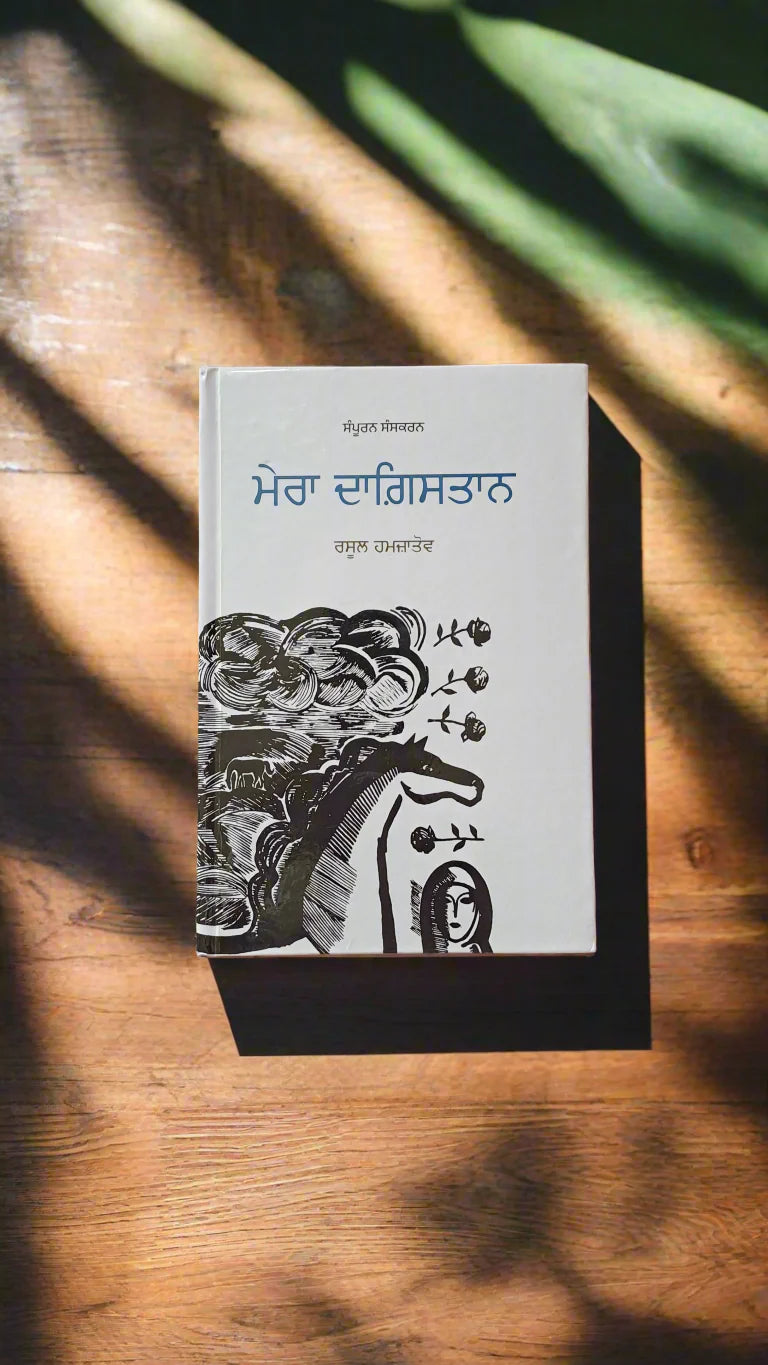
Mera Dagistan (ਮੇਰਾ ਦਾਗਿਸਤਾਨ) – Rasul Hamzatov
Mera Dagistan (ਮੇਰਾ ਦਾਗਿਸਤਾਨ) – Rasul Hamzatov
Couldn't load pickup availability
Share
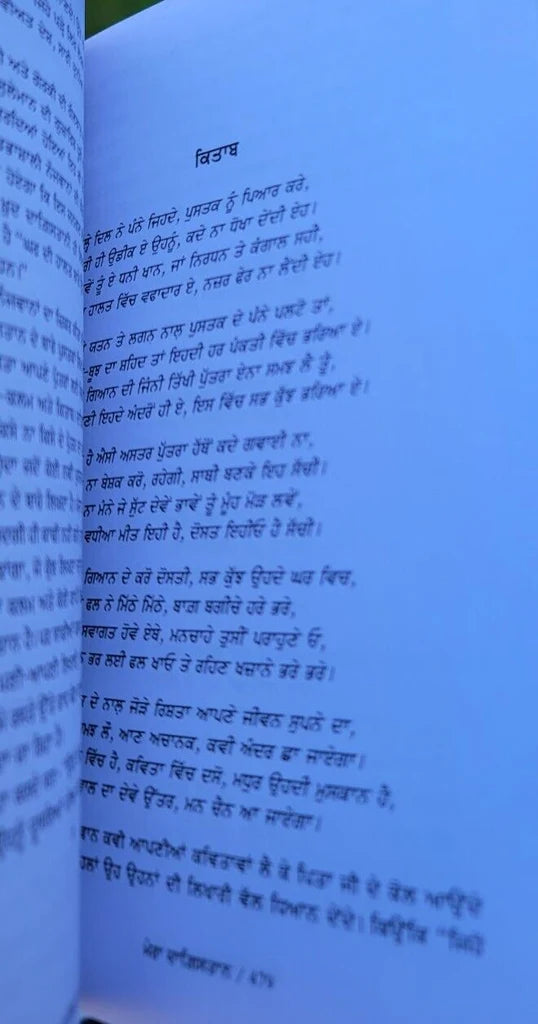
"Mera Dagistan" is the Punjabi translation of the world-famous autobiographical masterpiece "My Dagistan" by renowned Dagistani poet Rasul Hamzatov. This unique blend of prose, poetry, and reflection celebrates the culture, people, folklore, and landscapes of Dagistan with profound love and lyrical beauty.
"ਮੇਰਾ ਦਾਗਿਸਤਾਨ" ਰਸੂਲ ਗਮਜ਼ਾਤੋਵ ਦੀ ਵਿਸ਼ਵ ਪ੍ਰਸਿੱਧ ਆਤਮਕਥਾਤਮਕ ਕ੍ਰਿਤੀ "My Dagistan" ਦਾ ਪੰਜਾਬੀ ਅਨੁਵਾਦ ਹੈ। ਇਹ ਗਦ, ਪਦ ਅਤੇ ਚਿੰਤਨ ਦੇ ਅਨੋਖੇ ਮਿਸ਼ਰਣ ਰਾਹੀਂ ਦਾਗਿਸਤਾਨ ਦੀ ਸਭਿਆਚਾਰ, ਲੋਕ, ਲੋਕ-ਕਥਾਵਾਂ ਅਤੇ ਕੁਦਰਤੀ ਸੁੰਦਰਤਾ ਨੂੰ ਡੂੰਘੇ ਪਿਆਰ ਅਤੇ ਗੀਤਾਤਮਕ ਸੁੰਦਰਤਾ ਨਾਲ ਮਨਾਉਂਦੀ ਹੈ।
Book Title: Mera Dagistan (ਮੇਰਾ ਦਾਗਿਸਤਾਨ)
Author: Rasul Hamzatov
Language: Punjabi (Gurmukhi)
Genre: Autobiography/Memoir (ਆਤਮਕਥਾ/ਸੰਸਮਰਨ)
Available at: Kalam Kitaab


Introduction to Mera Dagistan Book
Among the greatest literary works of the twentieth century, Mera Dagistan Book by Rasul Hamzatov occupies a place that few books have been able to achieve. It is not simply a memoir, nor is it only a collection of essays or philosophical reflections. Instead, it is a remarkable literary masterpiece that combines autobiography, travel writing, poetry, storytelling, philosophy, history, humour, and cultural reflection into a single unforgettable work.
Unlike normal Punjabi novels that rely on suspense or dramatic twists, Mera Dagistan Book invites readers on a journey through the mind and heart of its author. Every chapter contains stories, observations, conversations, memories, and lessons that encourage readers to think more deeply about life, language, literature, culture, family, and the responsibilities that every human being carries.
This is one of those rare books that becomes more meaningful with every reading. Many readers return to it several times throughout their lives because each stage of life reveals new meanings hidden within its pages.
For lovers of Punjabi Books, world literature, and thoughtful non-fiction, Mera Dagistan Book is considered essential reading. It is not merely a book that entertains—it changes the way readers observe the world around them.
Who Was Rasul Hamzatov?
Before understanding why Mera Dagistan Book has become a literary classic, it is important to understand the remarkable man who wrote it.
Rasul Hamzatov was one of the most celebrated poets, writers, and thinkers of the twentieth century. Born in the mountainous region of Dagestan, he grew up in a culture where storytelling, poetry, music, and oral traditions were part of everyday life. These early experiences shaped not only his personality but also his entire literary philosophy.
Rather than separating literature from ordinary life, Rasul Hamzatov believed that literature exists everywhere—in conversations, memories, village life, nature, traditions, and the wisdom of ordinary people.
This belief became the foundation of Mera Dagistan Book.
Growing Up in Dagestan
The mountains of Dagestan were more than the backdrop of Rasul Hamzatov's childhood—they became one of his greatest teachers.
He grew up listening to folk tales, proverbs, poems, and stories shared by elders. Unlike modern education, where knowledge is often limited to classrooms, Hamzatov learned that wisdom also lives in villages, families, traditions, and everyday conversations.
These experiences gave his writing a warmth and authenticity that readers continue to admire today.
The Influence of His Father
Rasul Hamzatov's father, Gamzat Tsadasa, was a respected poet whose influence can be felt throughout the book.
Growing up in a literary household taught Rasul that writing was not simply about beautiful words. It carried responsibility.
A writer should preserve culture.
A writer should respect language.
A writer should tell the truth.
These lessons remained with him throughout his life and became central ideas in Mera Dagistan Book.
Understanding Dagestan
Many readers begin Mera Dagistan Book knowing very little about Dagestan.
That soon changes.
Rather than introducing Dagestan through statistics or history, Rasul Hamzatov introduces it through stories, memories, and emotions.
Readers discover mountains, villages, traditions, languages, hospitality, music, and people who possess extraordinary respect for family and culture.
Gradually, Dagestan becomes much more than a geographical location.
It becomes a symbol.
A symbol of identity.
A symbol of belonging.
A symbol of memory.
A symbol of home.
Dagestan as a Universal Homeland
Although the book is deeply connected to Dagestan, its message reaches far beyond one country.
Every reader has a homeland.
For someone in Punjab, that homeland may be a village surrounded by fields.
For another reader, it may be a busy city.
For someone living abroad, it may exist only in memories.
Rasul Hamzatov reminds readers that our relationship with home continues throughout life, no matter how far away we travel.
This universal emotion is one of the reasons the book has been translated into many languages.
What Makes Mera Dagistan Book Different?
Thousands of books are published every year.
Only a few remain popular after decades.
Mera Dagistan Book is one of them.
Its uniqueness lies in the fact that it refuses to follow traditional literary rules.
There is no conventional plot.
No central conflict.
No dramatic ending.
Instead, the book moves naturally from one idea to another, creating an experience that feels more like listening to a wise storyteller than reading a traditional book.
A Blend of Many Literary Forms
One chapter may read like an autobiography.
The next feels like philosophy.
Another becomes a travel memoir.
Then comes humour.
Then poetry.
Then cultural reflection.
Despite these constant changes, the book never feels disconnected.
Every chapter contributes to one larger conversation about life.
A Book Without Boundaries
Most books belong to a single genre.
Mera Dagistan Book belongs to many.
It is simultaneously:
A memoir.
A philosophical work.
A literary essay.
A cultural history.
A travel narrative.
A collection of reflections.
A celebration of language.
A tribute to ordinary people.
This unusual structure makes the book unlike almost anything else in world literature.
Rasul Hamzatov's Writing Style
One of the greatest reasons for the enduring popularity of Mera Dagistan Book is Rasul Hamzatov's remarkable writing style.
His words never feel artificial.
His observations never seem forced.
Instead, every page feels honest, thoughtful, and deeply personal.
Simple Language with Profound Ideas
Many philosophical books become difficult because of complicated language.
Rasul Hamzatov chooses the opposite approach.
He writes simply.
His sentences are short.
His language is accessible.
Yet behind every paragraph lies remarkable wisdom.
Readers often finish a chapter only to realise they have been quietly reflecting on their own lives.
That is the power of his writing.
Storytelling Instead of Teaching
One of Rasul Hamzatov's greatest strengths is that he rarely lectures the reader.
Instead, he tells stories.
A childhood memory becomes a lesson.
A conversation with an elder becomes philosophy.
A village tradition becomes an exploration of culture.
The reader never feels they are being taught.
Instead, wisdom appears naturally through storytelling.
Humour and Reflection
Although the book discusses many serious subjects, it never becomes heavy.
Hamzatov frequently includes gentle humour, clever observations, and memorable conversations that make the reading experience enjoyable.
Moments of laughter often appear beside moments of deep reflection.
This balance keeps the book lively while allowing profound ideas to emerge naturally.
Why Mera Dagistan Book Has Become a Literary Classic
Very few books remain relevant across generations.
This book has done exactly that.
Readers from different countries, cultures, religions, and backgrounds continue discovering something meaningful within its pages.
Its success comes from the fact that it discusses subjects that never become outdated.
A Book About Life
At its heart, Mera Dagistan Book is not about politics or history.
It is about life itself.
It explores questions such as:
What makes a meaningful life?
Why should we value our language?
What responsibilities do writers have?
Why are memories so important?
What makes a place feel like home?
How should we preserve culture for future generations?
These questions remain just as important today as they were when the book was first written.
A Book That Grows with the Reader
One remarkable quality of Mera Dagistan Book is that readers often experience it differently at different stages of life.
A young reader may admire its stories.
A writer may appreciate its reflections on literature.
An older reader may connect deeply with its discussions about memory, family, and legacy.
This ability to reveal new meanings over time is one of the defining characteristics of great literature.
Why Punjabi Readers Love Mera Dagistan Book
Few translated works have become as beloved among Punjabi readers as Mera Dagistan Book.
The reason goes far beyond the quality of the translation.
The cultural values described by Rasul Hamzatov often feel familiar to Punjabi readers.
Both societies value:
Respect for elders.
Family traditions.
Love for one's homeland.
Folk culture.
Poetry.
Hospitality.
Community life.
Mother tongue.
Storytelling.
Because of these shared values, Punjabi readers often feel that although the author is writing about Dagestan, he is also speaking about Punjab.
This emotional connection has made Mera Dagistan Book one of the most admired translated works in Punjabi literature.
Why Every Reader Should Read Mera Dagistan Book
There are books that entertain us for a weekend.
There are books that teach us new facts.
Then there are books that quietly change how we think.
Mera Dagistan Book belongs to the third category.
It encourages readers to appreciate their culture, respect their language, observe the beauty of ordinary life, and think deeply about the responsibilities that come with being human.
Whether you are a student, teacher, writer, poet, reader, or simply someone searching for meaningful literature, this book offers wisdom that remains relevant throughout life.
Its lessons are timeless because they are rooted in universal human experiences rather than temporary trends.
Homeland: The Heart of Mera Dagistan Book
If there is one idea that binds the entire Mera Dagistan Book together, it is Rasul Hamzatov's deep love for his homeland. Every chapter, whether directly or indirectly, returns to Dagestan—not simply as a geographical region, but as the source of identity, memory, language, and character.
For Rasul Hamzatov, a homeland is not measured by its size or political influence. It is measured by the people who live there, the stories they tell, the songs they sing, the mountains they climb, and the traditions they pass on from one generation to another.
As readers move through the book, they begin to understand that Dagestan is much more than the setting of the author's life. It becomes a symbol of every person's connection with their roots.
Whether a reader belongs to Punjab, Bengal, Scotland, Japan, or Mexico, the emotions remain the same.
Everyone has memories connected with a place called home.
Everyone carries the sounds, colours, and traditions of childhood within themselves.
This universal understanding is one of the reasons Mera Dagistan Book has become one of the most beloved works of world literature.
Home Is More Than a Place
Throughout the book, Rasul Hamzatov reminds readers that home is not defined by buildings or borders.
Home lives in memories.
It lives in family traditions.
It lives in the voices of parents.
It lives in village streets, mountains, fields, rivers, festivals, and familiar faces.
When people leave their homeland, they often discover that what they truly miss is not the land itself but the people, language, and memories connected with it.
This emotional truth gives the book extraordinary depth.
Language as the Soul of a Nation
One of the most memorable themes in Mera Dagistan Book is Rasul Hamzatov's love for language.
For him, language is far more than a method of communication.
It is the soul of a people.
Every language carries centuries of history, poetry, proverbs, songs, customs, humour, and wisdom.
When a language weakens, an entire culture begins to disappear with it.
This idea appears repeatedly throughout the book.
Rather than treating language as an academic subject, Rasul Hamzatov presents it as something sacred.
He encourages every generation to preserve its mother tongue because language is the bridge connecting the past with the future.
Why Mother Tongue Matters
Readers of Mera Dagistan Book often recognise how deeply the author values his native language.
He believes that learning other languages is valuable, but forgetting one's own language means losing an important part of one's identity.
This message has had a particularly strong impact on Punjabi readers.
Many people who read the Punjabi translation feel inspired to appreciate Punjabi literature, poetry, folklore, and storytelling more deeply.
The book quietly reminds readers that preserving a language is not only the responsibility of governments or schools.
It is the responsibility of every family.
Literature Is More Than Books
One of Rasul Hamzatov's greatest contributions as a writer is his understanding of literature itself.
Many people think literature exists only inside books.
The author disagrees.
According to him, literature exists wherever human beings share meaningful experiences.
A grandmother telling stories to her grandchildren.
A shepherd singing while walking through the mountains.
A farmer sharing old sayings.
A traveller remembering home.
A child asking innocent questions.
All these moments contain literature.
This beautiful understanding broadens the reader's idea of what literature truly is.
Stories Keep Civilizations Alive
Throughout history, civilizations have preserved themselves through stories.
Long before printing presses existed, stories travelled from one generation to another through memory.
They carried history.
Values.
Beliefs.
Lessons.
Culture.
Rasul Hamzatov celebrates this tradition.
He reminds readers that storytelling is not entertainment alone.
It is one of humanity's greatest responsibilities.
Without stories, future generations forget where they came from.
The Responsibility of Every Writer
One of the most inspiring aspects of Mera Dagistan Book is Rasul Hamzatov's reflections on writing itself.
He never describes writing as an easy profession.
Instead, he considers it a responsibility.
According to him, writers shape how future generations understand their culture.
Because of this, writers must write honestly.
A Writer Must First Learn to Observe
Many aspiring writers believe that writing begins with imagination.
Rasul Hamzatov offers a different perspective.
Before learning to write, one must first learn to observe.
Observe people.
Observe nature.
Observe conversations.
Observe silence.
Observe kindness.
Observe suffering.
The greatest writers notice details that others ignore.
Throughout the book, Rasul Hamzatov demonstrates this skill repeatedly.
Simple moments become unforgettable because he observes them carefully.
Writing Should Come from Experience
Another lesson repeated throughout the book is that genuine literature grows from lived experience.
Readers trust Rasul Hamzatov because his stories never feel artificial.
They emerge naturally from his own life, his homeland, and the people he has known.
He reminds young writers that true literature cannot be created by copying others.
Every writer must discover their own voice.
The Wisdom of Ordinary People
One of the most refreshing aspects of Mera Dagistan Book is the respect it shows toward ordinary people.
Many famous books celebrate kings, warriors, politicians, or great historical figures.
Rasul Hamzatov celebrates shepherds.
Farmers.
Village elders.
Craftsmen.
Teachers.
Mothers.
Children.
These ordinary individuals become the real heroes of his book.
Every Person Has Something to Teach
Throughout the book, readers encounter people who may never become famous but possess extraordinary wisdom.
An elderly villager may understand life better than a scholar.
A shepherd may express truth more beautifully than a philosopher.
A mother's advice may remain valuable for an entire lifetime.
These examples remind readers that wisdom cannot always be measured through education or social status.
Sometimes the greatest teachers are those who have simply lived honestly.
Family and the Values We Inherit
Family occupies an important place throughout Mera Dagistan Book.
Rasul Hamzatov repeatedly reflects upon the influence of parents, relatives, teachers, and elders.
He believes that before schools educate us, families shape our character.
It is within families that people first learn:
Honesty
Respect
Kindness
Responsibility
Hospitality
Hard work
Compassion
These values later influence every decision we make.
The Influence of Parents
The author often acknowledges the role his parents played in shaping both his character and his literary career.
Their guidance helped him understand that success means little without humility.
Knowledge has little value without kindness.
Talent should always serve humanity.
These simple yet profound lessons continue appearing throughout the book in different forms.
Memory: The Treasure Every Person Carries
Another powerful theme running through Mera Dagistan Book is memory.
Modern life encourages people to move quickly from one experience to another.
Rasul Hamzatov invites readers to slow down.
To remember.
To appreciate.
To preserve.
For him, memory is not simply remembering the past.
It is understanding who we have become because of the past.
Why Memories Shape Identity
Every person's identity is built upon memories.
Childhood.
Parents.
Teachers.
Friends.
Villages.
Books.
Songs.
Festivals.
Conversations.
Without memory, these experiences gradually disappear.
The author reminds readers that preserving memories is one way of preserving culture itself.
Humour and Humanity
Although Mera Dagistan Book explores profound philosophical ideas, it never becomes heavy or difficult to read.
Rasul Hamzatov frequently introduces gentle humour into his stories.
His humour never mocks people.
Instead, it reveals human nature with warmth and affection.
Readers often smile while reading because the situations feel familiar.
This balance between humour and wisdom keeps the book engaging from beginning to end.
Why the Book Inspires Writers, Readers, and Thinkers
One of the remarkable achievements of Mera Dagistan Book is that it speaks to many different kinds of readers.
A writer learns how to observe life.
A teacher discovers the importance of passing on culture.
A student learns to value language.
A parent reflects on family traditions.
A traveller thinks about home.
A reader simply enjoys beautiful literature.
Very few books succeed in connecting with such a wide audience.
This universal appeal explains why the book continues to be recommended across generations and across cultures.
Why These Themes Still Matter Today
Although Mera Dagistan Book was written decades ago, its ideas remain surprisingly relevant.
Today's world is more connected than ever before, yet many people feel disconnected from their own roots.
Languages disappear.
Traditional stories are forgotten.
Communities change.
Families become scattered across different countries.
Technology allows instant communication, but meaningful conversations often become rare.
Rasul Hamzatov's reflections encourage readers to protect the things that truly matter—language, culture, family, literature, memory, and human relationships.
These are not ideas that belong only to Dagestan.
They belong to every society.
They are the reason Mera Dagistan Book continues to inspire readers across the world and remains one of the finest works of literary reflection ever written.
What Makes Mera Dagistan Book So Special?
There are books that become popular for a few years, and there are books that remain relevant for generations. Mera Dagistan Book belongs to the second category. Its greatness does not depend upon suspense, action, or dramatic storytelling. Instead, it survives because it speaks about ideas that never become old.
Every generation faces different challenges, but every generation also asks the same fundamental questions.
Who am I?
Where do I belong?
What is the value of my language?
What should I leave behind for future generations?
What makes a meaningful life?
Rasul Hamzatov does not pretend to have simple answers for every question. Instead, he encourages readers to think for themselves. This is one of the greatest strengths of the book.
Unlike many modern books that attempt to persuade readers to accept a particular viewpoint, Mera Dagistan Book invites conversation. Every chapter becomes an opportunity to reflect upon one's own life.
This openness is one reason readers continue returning to the book throughout their lives.
A Book That Changes Every Time You Read It
One remarkable quality of Mera Dagistan Book is that readers often describe it as a completely different book each time they revisit it.
A young student may admire the stories and humour.
A teacher may appreciate its reflections on education.
A writer may discover lessons about observation and creativity.
Someone living far from home may find comfort in its discussions of memory and belonging.
An older reader may connect most deeply with its reflections on legacy and the passing of time.
The words remain unchanged.
The reader changes.
This ability to grow alongside its readers is one of the defining characteristics of truly great literature.
Why Writers Admire Mera Dagistan Book
Although the book is loved by readers from every background, it occupies a particularly special place among writers.
Many experienced authors recommend Mera Dagistan Book not because it teaches technical writing, but because it teaches something much more valuable.
It teaches how to see the world.
Observation Before Expression
Rasul Hamzatov repeatedly demonstrates that great writing begins long before a person sits down to write.
A writer must first learn to observe.
Observe ordinary conversations.
Observe changing seasons.
Observe children.
Observe elders.
Observe silence.
Observe joy.
Observe sorrow.
The smallest details often reveal the greatest truths.
Throughout the book, readers witness how simple experiences become profound reflections because the author pays careful attention to them.
This lesson remains invaluable for anyone interested in literature.
Writing With Honesty
Another important lesson found throughout the book is honesty.
According to Rasul Hamzatov, readers can immediately recognise artificial writing.
Words without genuine experience rarely touch the heart.
Instead of writing to impress others, a writer should write with sincerity.
That sincerity becomes visible throughout Mera Dagistan Book.
The author never pretends to know everything.
He openly reflects upon his own doubts, memories, mistakes, and experiences.
This honesty creates trust between the writer and the reader.
Lessons Every Reader Can Learn
One reason Mera Dagistan Book continues attracting new readers is that every chapter contains practical wisdom.
These lessons are not presented as rules.
Instead, they emerge naturally through stories and reflections.
Readers often finish a chapter without realising they have learned something important.
Some of the most valuable lessons include:
Respect Your Roots
No matter how successful a person becomes, forgetting one's roots creates emptiness.
The book reminds readers that true progress does not require abandoning tradition.
Instead, progress and tradition can strengthen one another.
Value Your Mother Tongue
Throughout the book, Rasul Hamzatov celebrates the beauty of native languages.
He encourages readers to protect their mother tongue because language preserves culture, history, and identity.
This message feels especially meaningful for Punjabi readers who wish to preserve Punjabi literature for future generations.
Learn From Ordinary People
The book repeatedly demonstrates that wisdom is not limited to universities or famous personalities.
Farmers.
Craftsmen.
Mothers.
Village elders.
Teachers.
Children.
Every person has something valuable to teach.
This respect for ordinary life gives the book extraordinary warmth.
Never Stop Learning
Education, according to Rasul Hamzatov, continues throughout life.
Books teach us.
Travelling teaches us.
Friendship teaches us.
Failure teaches us.
Listening teaches us.
Curiosity keeps the mind alive.
Readers are encouraged to remain lifelong students.
Why Punjabi Readers Feel Connected to This Book
One of the most interesting aspects of Mera Dagistan Book is the deep emotional connection it has developed among Punjabi readers.
Although Dagestan and Punjab are separated by thousands of kilometres, many of the values celebrated by Rasul Hamzatov feel remarkably familiar.
Shared Cultural Values
Both cultures place great importance on:
Respect for parents and elders.
Love for one's homeland.
Hospitality.
Poetry and oral traditions.
Community life.
Agricultural heritage.
Strong family relationships.
Pride in the mother tongue.
Because of these similarities, many Punjabi readers feel that the author understands emotions that also exist within Punjabi society.
This cultural closeness has helped the Punjabi translation become one of the most admired translated books in Punjabi literature.
Who Should Read Mera Dagistan Book?
One of the greatest strengths of Mera Dagistan Book is that it speaks to readers from many different backgrounds.
Readers Who Love Literary Classics
Anyone interested in world literature will appreciate the originality of the book.
Its unique structure and timeless ideas make it very different from conventional novels.
Aspiring Writers
Young writers often focus on style before developing observation.
Rasul Hamzatov teaches the opposite.
First learn to understand life.
Then learn to express it.
For this reason, many writers consider this book essential reading.
Students
Students interested in literature, philosophy, culture, or creative writing will find countless ideas worth reflecting upon.
The book encourages independent thinking rather than memorising information.
Teachers
Teachers often appreciate the author's respect for education, storytelling, language, and lifelong learning.
Many chapters inspire discussions that remain relevant in classrooms even today.
Readers Interested in Culture
Those who enjoy learning about different societies will discover that Mera Dagistan Book offers much more than descriptions of Dagestan.
It explores universal human experiences through the lens of one culture.
This makes it both culturally specific and universally meaningful.
Why Mera Dagistan Book Matters Today
Modern life moves quickly.
People consume information faster than ever before.
Yet meaningful reflection has become increasingly rare.
Many people spend hours reading short posts and headlines but very little time thinking deeply.
Mera Dagistan Book encourages a different approach.
It asks readers to slow down.
To observe carefully.
To listen patiently.
To value conversations.
To appreciate traditions.
To remember those who came before us.
These ideas feel even more important today than when the book was first written.
Building a Personal Library With Mera Dagistan Book
Every reader has certain books that remain on their bookshelf for years.
Books that are read repeatedly.
Books that are recommended to friends.
Books that continue offering new insights with every reading.
Mera Dagistan Book is one such book.
It is not simply read once and forgotten.
Instead, it becomes part of a reader's lifelong literary journey.
Whether placed alongside Punjabi classics, world literature, philosophy, or memoirs, it remains one of the most rewarding books to revisit.
Why You Should Read Mera Dagistan Book
If you are still wondering whether this book deserves a place in your collection, the answer becomes clear after understanding what it offers.
You should read Mera Dagistan Book because it:
Encourages deep thinking rather than superficial reading.
Celebrates language, culture, and identity.
Inspires readers to appreciate their own roots.
Demonstrates the power of honest storytelling.
Offers timeless lessons about family, memory, and responsibility.
Helps aspiring writers understand observation, sincerity, and creativity.
Shows that ordinary people often possess extraordinary wisdom.
Combines literature, philosophy, memoir, and cultural reflection in a uniquely engaging way.
Continues revealing new meanings every time it is read.
Very few books accomplish all of these things within a single volume.
That is why readers across generations continue recommending it.
Final Thoughts on Mera Dagistan Book
There are books that entertain us for a few hours, books that educate us for a season, and books that remain with us throughout our lives. Mera Dagistan Book by Rasul Hamzatov belongs to the last category. It is not simply a book about Dagestan—it is a book about humanity. Through reflections on homeland, language, literature, family, memory, creativity, and responsibility, Rasul Hamzatov reminds us that the richest lessons in life often come from ordinary people and everyday experiences.
One of the greatest achievements of the book is its ability to connect readers from completely different cultures. A reader in Punjab, Europe, or any other part of the world can recognise the same emotions, hopes, and memories within its pages. That universality is what has transformed it into a timeless classic.
For readers who enjoy thoughtful literature, for aspiring writers searching for inspiration, and for anyone who wishes to understand the relationship between culture and identity, Mera Dagistan Book remains an unforgettable reading experience. It is a work that rewards patience, reflection, and repeated reading, offering fresh insights every time it is opened.
If your library contains books that shape the way you think rather than simply passing the time, then Mera Dagistan Book deserves a place among them. It is one of those rare literary masterpieces that not only enriches the mind but also leaves a lasting impression on the heart, making it an essential addition to every serious collection of world literature and Punjabi Books.