

Kalam Kitaab
Kis Bidh Ruli Patshahi ( ਕਿਸ ਬਿਧ ਰੁਲੀ ਪਾਤਸ਼ਾਹੀ ) Book - Ajmer Singh
Kis Bidh Ruli Patshahi ( ਕਿਸ ਬਿਧ ਰੁਲੀ ਪਾਤਸ਼ਾਹੀ ) Book - Ajmer Singh
Couldn't load pickup availability
Share
"ਕਿਸ ਬਿਧ ਰੁਲੀ ਪਾਤਸ਼ਾਹੀ" ਅਜਮੇਰ ਸਿੰਘ ਦੀ ਇੱਕ ਮਹੱਤਵਪੂਰਨ ਪੰਜਾਬੀ ਇਤਿਹਾਸਕ ਅਤੇ ਵਿਚਾਰਸ਼ੀਲ ਕਿਤਾਬ ਹੈ ਜੋ ਸਿੱਖ ਇਤਿਹਾਸ, ਪੰਜਾਬ ਦੀ ਰਾਜਨੀਤੀ ਅਤੇ ਪਾਤਸ਼ਾਹੀ ਦੇ ਪਤਨ ਨਾਲ ਜੁੜੇ ਇਤਿਹਾਸਕ ਪੱਖਾਂ ਦੀ ਪੜਚੋਲ ਕਰਦੀ ਹੈ। ਕਿਸ ਬਿਧ ਰੁਲੀ ਪਾਤਸ਼ਾਹੀ ਵਿੱਚ ਇਤਿਹਾਸਕ ਘਟਨਾਵਾਂ, ਸਿਆਸੀ ਹਾਲਾਤ ਅਤੇ ਉਨ੍ਹਾਂ ਕਾਰਨਾਂ ਨੂੰ ਸਮਝਣ ਦੀ ਕੋਸ਼ਿਸ਼ ਕੀਤੀ ਗਈ ਹੈ ਜਿਨ੍ਹਾਂ ਨੇ ਸਿੱਖ ਰਾਜ ਅਤੇ ਪੰਜਾਬ ਦੀ ਦਿਸ਼ਾ ਨੂੰ ਪ੍ਰਭਾਵਿਤ ਕੀਤਾ। ਅਜਮੇਰ ਸਿੰਘ ਦੀ ਵਿਸ਼ਲੇਸ਼ਣਾਤਮਕ ਲਿਖਤ ਪਾਠਕਾਂ ਨੂੰ ਸਿੱਖ ਇਤਿਹਾਸ ਨੂੰ ਇੱਕ ਵੱਖਰੇ ਨਜ਼ਰੀਏ ਤੋਂ ਪੜ੍ਹਨ ਅਤੇ ਇਤਿਹਾਸਕ ਘਟਨਾਵਾਂ ਬਾਰੇ ਡੂੰਘਾਈ ਨਾਲ ਵਿਚਾਰ ਕਰਨ ਲਈ ਪ੍ਰੇਰਿਤ ਕਰਦੀ ਹੈ।
"Kis Bidh Ruli Patshahi" by Ajmer Singh is a significant Punjabi historical and analytical work that examines Sikh history, Punjab's political circumstances, and the factors surrounding the decline of Sikh sovereignty. Kis Bidh Ruli Patshahi looks at historical events and political developments while encouraging readers to reflect on the forces that shaped Punjab's history. With its analytical approach and focus on Sikh political history, Kis Bidh Ruli Patshahi is an important read for those interested in Sikh history, Punjab's past, and historical analysis.
Book Title: ਕਿਸ ਬਿਧ ਰੁਲੀ ਪਾਤਸ਼ਾਹੀ (Kis Bidh Ruli Patshahi)
Author: Ajmer Singh
Language: Punjabi (Gurmukhi)
Genre: Sikh History / Punjab History / Historical Analysis / Political History
Available at: Kalam Kitaab
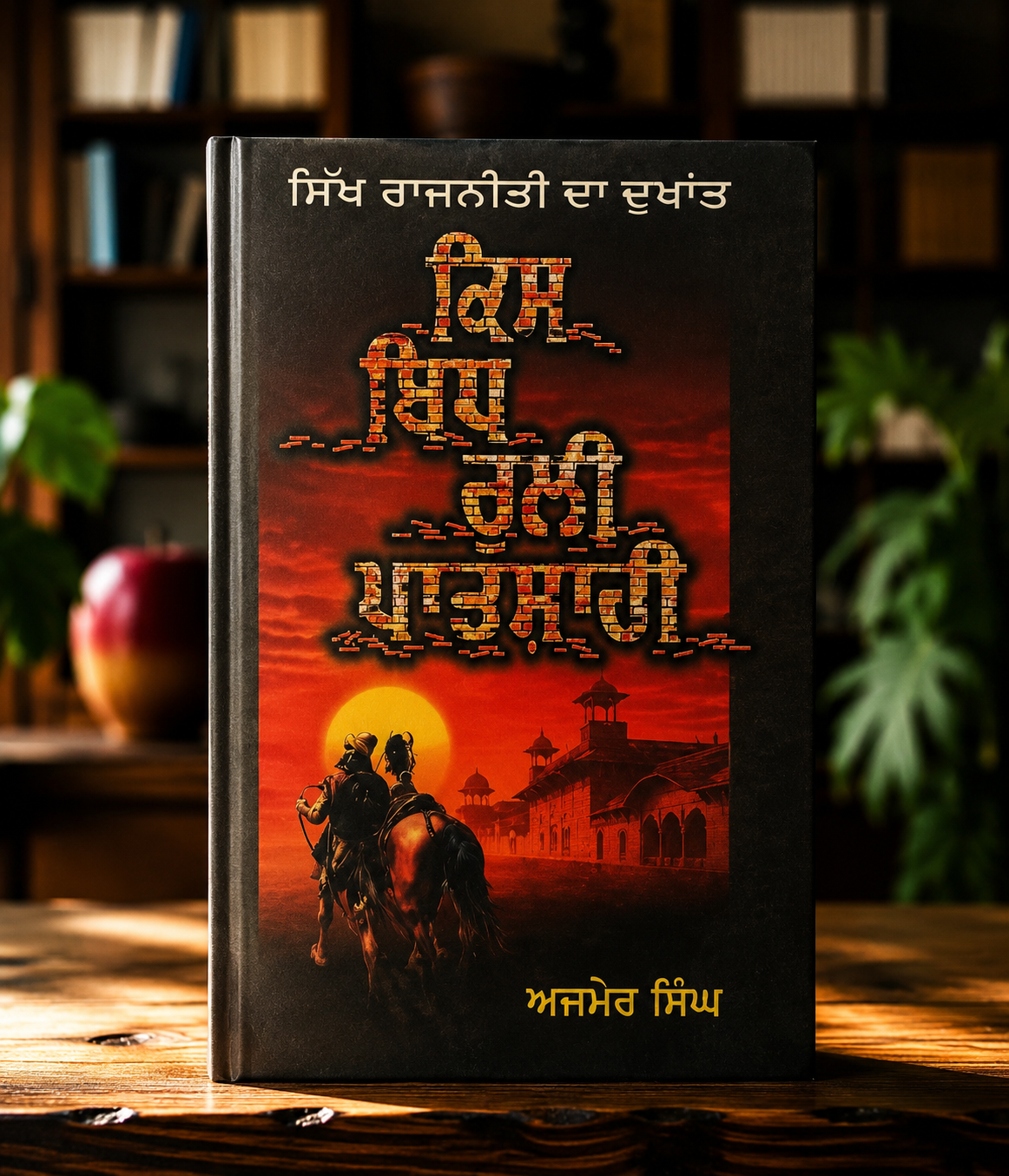
Kis Bidh Ruli Patshahi – Ajmer Singh
Kis Bidh Ruli Patshahi – Understanding the Fall of Sikh Sovereignty
Kis Bidh Ruli Patshahi by Ajmer Singh is a Punjabi historical and analytical work that examines one of the most important questions surrounding Sikh political history: how did the Sikh Patshahi rise to such strength, and through what circumstances did that sovereignty eventually decline?
The title Kis Bidh Ruli Patshahi itself carries a powerful historical question. Kis Bidh asks about the manner, circumstances or process, while Ruli Patshahi points towards the decline and fall of political sovereignty. Together, Kis Bidh Ruli Patshahi directs the reader towards an examination of the forces that shaped the rise and eventual weakening of Sikh political power.
Rather than looking at history merely as a sequence of rulers and battles, Kis Bidh Ruli Patshahi encourages readers to think about political circumstances, leadership, internal developments, institutional strength, conflicts and external pressures. The subject becomes particularly important because the Sikh political state was not created suddenly. It developed through a long period of struggle, organisation and consolidation.
Understanding how that political power was created is therefore essential to understanding Kis Bidh Ruli Patshahi and the historical question at its centre.
The Meaning Behind Kis Bidh Ruli Patshahi
The title Kis Bidh Ruli Patshahi immediately invites the reader to ask questions.
How did the Patshahi come into existence?
What circumstances strengthened it?
What challenges developed within it?
What changed after Maharaja Ranjit Singh?
How did internal political instability affect the Sikh state?
How did British expansion influence the final outcome?
These questions make Kis Bidh Ruli Patshahi more than a simple historical narrative.
The title encourages analysis.
It asks readers to examine the process through which political power can rise, develop, become vulnerable and eventually disappear.
The Rise of Sikh Political Power
The history examined through Kis Bidh Ruli Patshahi begins with the long development of Sikh political strength.
The Sikh community experienced periods of persecution, resistance and military struggle. Over time, Sikh groups developed systems of organisation that allowed them to survive and eventually challenge established political powers.
The emergence of the Sikh misls represented an important stage in this process.
The misls created a political and military framework through which Sikh power expanded across Punjab.
This development was not the result of one individual or one event.
It was the outcome of decades of collective effort, leadership, military organisation and political circumstances.
Understanding this rise provides the foundation for understanding Kis Bidh Ruli Patshahi.
From Struggle to Patshahi
The idea of Sikh sovereignty developed gradually.
The Sikh community moved from a position of resistance towards the establishment of political authority.
The formation of Sikh political power represented a major transformation in Punjab.
The emergence of the Sikh Empire under Maharaja Ranjit Singh eventually brought together large territories under a central political authority.
The word Patshahi therefore represents much more than a political title.
It represents sovereignty, authority and the ability to determine the political direction of a territory.
The historical importance of Kis Bidh Ruli Patshahi comes from examining what happened to that sovereignty after it had been established.
Maharaja Ranjit Singh and Sikh Sovereignty
No discussion of Kis Bidh Ruli Patshahi can ignore the central place of Maharaja Ranjit Singh in Sikh political history.
Maharaja Ranjit Singh played a major role in consolidating Sikh political power.
Under his leadership, Lahore became the centre of a powerful state.
The Sikh Empire developed a strong military organisation and expanded its territorial influence.
Different communities and regions became part of the political structure.
The period of Ranjit Singh's rule is therefore an important reference point when examining the question raised by Kis Bidh Ruli Patshahi.
A state that had achieved such political strength eventually experienced instability and collapse.
Understanding the transition between these two stages is at the heart of the historical question.
The Importance of Political Leadership
Political leadership can strongly influence the stability of a state.
A capable leader can unite different groups, manage competing interests and provide direction during difficult circumstances.
Maharaja Ranjit Singh's leadership created a considerable degree of political stability.
However, political systems must also survive beyond individual leaders.
The period after Ranjit Singh's death demonstrated the difficulty of maintaining stability during a major leadership transition.
This makes leadership an important theme in Kis Bidh Ruli Patshahi.
The Crisis After Maharaja Ranjit Singh
The death of Maharaja Ranjit Singh created a significant political transition.
The question of succession became complicated.
Competition for authority increased.
Different political interests began to influence the functioning of the Lahore court.
As political instability increased, the strength of the central political structure was affected.
This period is particularly important for understanding Kis Bidh Ruli Patshahi because it provides an opportunity to examine how internal instability can weaken a political system that had previously appeared powerful.
Internal Divisions and Political Weakness
A major political power requires internal cooperation.
When political groups begin competing against one another, decision-making can become difficult.
Internal divisions can reduce institutional strength and create opportunities for external powers.
The Sikh state experienced increasing political complications after the death of Ranjit Singh.
For a reader studying Kis Bidh Ruli Patshahi, these developments are important because they raise the question of whether the weakening of Sikh sovereignty was caused only by external pressure or whether internal political problems also played a significant role.
The Sikh Empire as a Political Achievement
The Sikh Empire represented a remarkable stage in the political history of Punjab.
It demonstrated that Sikh political power had developed from a period of struggle into a sovereign state capable of dealing with major regional powers.
Its military strength, territorial expansion and political organisation made it an important force in nineteenth-century South Asia.
The later decline of this state therefore becomes even more significant.
Kis Bidh Ruli Patshahi encourages readers to examine this contrast between political achievement and political decline.
The Changing Political Environment
The political environment of South Asia was changing rapidly during the nineteenth century.
The British East India Company had expanded its influence over large parts of the Indian subcontinent.
Punjab remained one of the major independent political powers in the region.
This created a situation in which the Sikh state had to manage both internal political challenges and an increasingly powerful external force.
The relationship between these two pressures is important to the historical question raised by Kis Bidh Ruli Patshahi.
British Expansion and Punjab
British expansion changed the political balance of the subcontinent.
As British influence moved closer to Punjab, the Sikh state faced a powerful neighbouring force.
The political relationship between the Sikh Empire and the British became increasingly important.
Diplomacy, military strategy and political decisions all influenced this relationship.
The eventual confrontation between the two powers became one of the defining moments in Punjab's nineteenth-century history.
The Anglo-Sikh Wars
The Anglo-Sikh Wars represent a crucial stage in the story examined through Kis Bidh Ruli Patshahi.
The First Anglo-Sikh War weakened the Sikh political structure and increased British influence.
The Second Anglo-Sikh War ultimately resulted in the annexation of Punjab.
These conflicts cannot be understood only through battlefield events.
Political leadership, internal divisions, military organisation and the wider strategic environment all contributed to the outcome.
This makes the wars central to understanding the historical question contained in Kis Bidh Ruli Patshahi.
Why the Fall of the Patshahi Matters
The decline of Sikh sovereignty was a major turning point.
The Sikh Empire disappeared as an independent political power.
Punjab entered a new political era under British rule.
This change affected administration, military organisation, political authority and the future development of the region.
The fall of the Patshahi therefore cannot be treated as simply the end of one ruling structure.
It represented a fundamental transformation in Punjab's political history.
History Requires Questions
One of the strongest aspects of the subject of Kis Bidh Ruli Patshahi is its questioning approach.
Instead of simply asking what happened, the title encourages readers to ask how and why it happened.
Historical understanding becomes deeper when readers examine causes and consequences.
Why did political stability weaken?
How important were succession struggles?
What happened to internal unity?
How did external pressure interact with internal problems?
What lessons can be learned from the decline?
These questions make historical study more analytical and meaningful.
The Importance of Historical Memory
The rise and fall of Sikh political power continues to hold an important place in Punjab's historical memory.
The stories of the Sikh misls, Maharaja Ranjit Singh and the Sikh Empire remain significant parts of Sikh and Punjabi history.
But remembering the achievements alone does not provide a complete understanding.
The decline of the Patshahi is equally important.
Kis Bidh Ruli Patshahi directs attention towards this less comfortable but historically essential part of the story.
Major Themes of Kis Bidh Ruli Patshahi
The book can be explored through themes such as:
- Sikh political sovereignty
- The rise of the Sikh Empire
- Maharaja Ranjit Singh
- Sikh misls
- Political leadership
- Succession and instability
- Internal divisions
- Political institutions
- Military power
- British expansion
- Anglo-Sikh Wars
- Punjab's political history
- Loss of sovereignty
- Historical memory
- Political decline and its causes
Who Should Read Kis Bidh Ruli Patshahi?
Kis Bidh Ruli Patshahi is particularly suitable for readers interested in Sikh history, Punjab's political history, the Sikh Empire, Maharaja Ranjit Singh and historical analysis.
Students, researchers, history enthusiasts and readers interested in understanding the political development of Punjab can find the subject especially valuable.
Readers who want to go beyond memorising historical dates and instead understand the circumstances behind major political changes may also find Kis Bidh Ruli Patshahi particularly thought-provoking.
Kis Bidh Ruli Patshahi: Understanding the Decline of Sikh Sovereignty
The central question of Kis Bidh Ruli Patshahi becomes even more significant when the reader looks closely at the period following Maharaja Ranjit Singh.
The Sikh Empire had achieved considerable political strength.
Yet within a relatively short historical period after Ranjit Singh's death, the political structure became increasingly unstable and ultimately lost its sovereignty.
The transition from strength to decline is therefore one of the most important subjects connected with Kis Bidh Ruli Patshahi.
The Challenge of Succession
A political system must have a mechanism for transferring authority.
When succession becomes uncertain, competing interests can emerge.
After Maharaja Ranjit Singh's death, the Lahore court experienced considerable political instability.
The struggle for authority affected the functioning of the state and weakened political cohesion.
For Kis Bidh Ruli Patshahi, this period is significant because it demonstrates how a leadership crisis can have consequences far beyond the individuals involved.
A succession dispute can become a state crisis when political institutions are unable to maintain stability.
Political Rivalries
Political rivalry can be constructive when different ideas are debated within stable institutions.
But when rivalries become struggles for personal power, they can weaken the entire political system.
The post-Ranjit Singh period witnessed competing political interests and shifting alliances.
The resulting instability reduced the ability of the state to maintain consistent political direction.
The story of Kis Bidh Ruli Patshahi therefore involves not only external enemies but also the internal political environment of the Sikh state.
The Role of Institutions
The strength of a state depends on institutions as much as individuals.
Military structures, administrative systems, political leadership and succession arrangements all contribute to stability.
The Sikh Empire had developed significant institutions during Ranjit Singh's rule.
However, the ability of those institutions to maintain unity after his death became a major challenge.
This provides an important lesson within the broader subject of Kis Bidh Ruli Patshahi.
Political power can be created through strong leadership, but its survival depends on the strength and continuity of institutions.
Military Strength Alone Was Not Enough
The Sikh Empire possessed considerable military strength.
The Khalsa army had developed into a formidable military organisation.
However, military power cannot exist separately from political leadership.
A strong military requires coordination, strategic direction and political stability.
When political divisions increase, even a powerful military structure can face difficulties.
This relationship between political unity and military strength is essential when considering Kis Bidh Ruli Patshahi.
The First Anglo-Sikh War
The First Anglo-Sikh War marked a major confrontation between the Sikh Empire and the British.
The conflict revealed the growing political and military challenges faced by the Sikh state.
The outcome weakened Sikh political independence and increased British influence in Punjab.
The war therefore became an important stage in the process examined through Kis Bidh Ruli Patshahi.
It demonstrated how internal instability and external pressure could combine to weaken sovereignty.
The Second Anglo-Sikh War
The Second Anglo-Sikh War was even more decisive.
Its outcome brought the Sikh Empire to an end and resulted in the annexation of Punjab by the British.
This represented the final loss of Sikh political sovereignty.
For Punjab, it marked the beginning of a fundamentally different political era.
For the historical question of Kis Bidh Ruli Patshahi, it represents the point at which the Patshahi was no longer an independent political reality.
The Annexation of Punjab
The annexation of Punjab transformed the political structure of the region.
The independent Sikh state was replaced by British colonial administration.
Political authority shifted.
Military power was reorganised.
Administrative systems changed.
The relationship between Punjab and the wider colonial state was fundamentally altered.
The significance of this transition extends far beyond the nineteenth century because colonial rule influenced Punjab's subsequent political, social and economic development.
The Question of Internal Unity
One of the broader lessons emerging from Kis Bidh Ruli Patshahi is the importance of unity.
A political community can possess resources, military strength and territorial influence, but internal fragmentation can weaken all of these advantages.
Unity does not mean the absence of disagreement.
It means the ability to resolve disagreements without destroying the institutions that hold a political system together.
The decline of Sikh sovereignty provides an important historical case through which readers can examine this principle.
The Relationship Between Internal and External Factors
It would be too simple to explain the fall of the Sikh Empire through only one factor.
Political decline generally develops through the interaction of several circumstances.
Internal instability can make external pressure more dangerous.
External pressure can intensify internal disagreements.
Political decisions can influence military outcomes.
Military defeats can create further political instability.
These relationships demonstrate why the question in Kis Bidh Ruli Patshahi deserves careful historical consideration.
Punjab After the Sikh Empire
The end of Sikh sovereignty changed the future direction of Punjab.
The region became part of the British colonial system and was increasingly connected with the administrative and economic structures of British India.
The political traditions of the Sikh Empire became part of historical memory.
At the same time, Punjab entered a new era that would eventually lead towards the political developments of the twentieth century.
Understanding this transition helps readers place Kis Bidh Ruli Patshahi within the larger history of Punjab.
The Importance of Studying Political Decline
Historical studies often focus on successful rulers and victorious battles.
But decline can provide equally important lessons.
The fall of a political system reveals weaknesses that may not be obvious during its strongest period.
It shows how leadership, institutions, unity and external pressure interact.
This is why Kis Bidh Ruli Patshahi is an important historical question.
Understanding how political power was lost can be just as valuable as understanding how it was achieved.
The Legacy of Sikh Sovereignty
Even after the political end of the Sikh Empire, its historical legacy remained important.
The memory of Sikh sovereignty continued through literature, oral traditions, historical writings and community memory.
Maharaja Ranjit Singh and the Sikh Empire became important symbols of a period when Punjab possessed its own powerful political authority.
The decline of that sovereignty therefore became an important subject of historical reflection.
Kis Bidh Ruli Patshahi contributes to this larger conversation by directing attention towards the circumstances of that decline.
Learning From History
History becomes meaningful when it allows readers to understand patterns.
The rise and fall of political powers throughout history demonstrate that no political system remains permanently secure.
Leadership changes.
Institutions evolve.
External forces grow stronger.
Internal relationships change.
Political decisions create long-term consequences.
The story behind Kis Bidh Ruli Patshahi can therefore encourage readers to think about the larger principles that influence political stability.
For Students of Sikh History
Students interested in Sikh history can benefit from examining the complete political journey of the Sikh community.
This includes the development of the misls, the consolidation of power under Maharaja Ranjit Singh, the functioning of the Sikh Empire, the political instability following his death and the eventual Anglo-Sikh conflicts.
Studying these stages together provides a more complete understanding of the question asked by Kis Bidh Ruli Patshahi.
For Readers of Punjab History
Punjab's history cannot be separated from the history of the Sikh Empire.
The political transformation of Punjab during the nineteenth century had long-term consequences for the region.
Readers interested in Punjab's past can therefore use Kis Bidh Ruli Patshahi as a way to explore questions of sovereignty, political authority, colonial expansion and historical change.
For Readers Who Prefer Analytical History
Kis Bidh Ruli Patshahi is especially relevant for readers who enjoy asking why rather than simply learning what happened.
The title itself establishes an analytical approach.
It does not merely announce the fall of a political state.
It asks how the fall occurred.
This encourages readers to examine causes, relationships and consequences.
Such an approach can make historical reading more engaging and intellectually rewarding.
Key Themes of Kis Bidh Ruli Patshahi
The major themes include:
- Sikh Patshahi
- Sikh sovereignty
- Sikh Empire
- Maharaja Ranjit Singh
- Political leadership
- Succession crisis
- Internal divisions
- Political institutions
- Khalsa military power
- British expansion
- Anglo-Sikh Wars
- Annexation of Punjab
- Colonial transformation
- Historical memory
- Political decline
- The causes behind the fall of sovereignty
Why Add Kis Bidh Ruli Patshahi to Your Collection?
For anyone building a collection of Punjabi historical and Sikh literature, Kis Bidh Ruli Patshahi offers a subject of considerable importance.
It focuses attention on one of the most significant transformations in Punjab's political history — the rise and eventual fall of Sikh sovereignty.
The book encourages readers to move beyond simple narratives and examine the political circumstances surrounding the decline of the Sikh state.
It can be particularly valuable for readers who want to understand the Sikh Empire not only through its achievements but also through the challenges and circumstances that contributed to its eventual end.
Final Thoughts
Kis Bidh Ruli Patshahi – Ajmer Singh centres on a question that remains deeply important for anyone interested in Sikh and Punjab history: how did the Sikh Patshahi, established through a long period of struggle and political development, eventually decline?
The journey from Sikh resistance to sovereignty, the rise of the Sikh Empire, the leadership of Maharaja Ranjit Singh, the instability that followed his death, internal political divisions, British expansion and the Anglo-Sikh Wars all form part of the larger historical context surrounding Kis Bidh Ruli Patshahi.
The value of Kis Bidh Ruli Patshahi lies in encouraging readers to look at history analytically. The fall of Sikh sovereignty cannot be understood through a single event or a single explanation. It requires consideration of leadership, institutions, political unity, military strength, internal rivalries and external pressures.
For readers interested in Sikh history, Punjab history, Maharaja Ranjit Singh, the Sikh Empire, Sikh sovereignty and historical analysis, Kis Bidh Ruli Patshahi offers an opportunity to explore one of the most important political transitions in the history of Punjab.
Ultimately, Kis Bidh Ruli Patshahi reminds readers that understanding history means examining both the rise and the fall of political power. The achievements of the Sikh Empire are important, but understanding the circumstances through which that Patshahi was weakened and eventually lost is equally essential for developing a deeper understanding of Punjab's historical journey.