

Kalam Kitaab
Ki Ishwar Mar Geya ( ਕੀ ਈਸ਼ਵਰ ਮਰ ਗਿਆ ਹੈ ? ) Book - Osho
Ki Ishwar Mar Geya ( ਕੀ ਈਸ਼ਵਰ ਮਰ ਗਿਆ ਹੈ ? ) Book - Osho
Couldn't load pickup availability
Share
"Ki Ishwar Mar Gaya Hai" ਓਸ਼ੋ ਦੀ ਇੱਕ ਡੂੰਘੀ ਰੂਹਾਨੀ ਅਤੇ ਦਾਰਸ਼ਨਿਕ ਕਿਤਾਬ ਹੈ ਜੋ ਈਸ਼ਵਰ, ਧਰਮ, ਆਸਥਾ, ਚੇਤਨਾ ਅਤੇ ਮਨੁੱਖ ਦੀ ਸੱਚ ਦੀ ਖੋਜ ਵਰਗੇ ਗੰਭੀਰ ਵਿਸ਼ਿਆਂ 'ਤੇ ਵਿਚਾਰ ਕਰਦੀ ਹੈ। Ki Ishwar Mar Gaya Hai ਪਾਠਕਾਂ ਨੂੰ ਰਵਾਇਤੀ ਧਾਰਮਿਕ ਧਾਰਨਾਵਾਂ ਨੂੰ ਨਵੇਂ ਨਜ਼ਰੀਏ ਨਾਲ ਦੇਖਣ, ਆਪਣੇ ਵਿਸ਼ਵਾਸਾਂ 'ਤੇ ਸਵਾਲ ਕਰਨ ਅਤੇ ਅੰਦਰੂਨੀ ਸੱਚ ਦੀ ਖੋਜ ਕਰਨ ਲਈ ਪ੍ਰੇਰਿਤ ਕਰਦੀ ਹੈ। ਓਸ਼ੋ ਦੀ ਸਪਸ਼ਟ ਅਤੇ ਵਿਚਾਰ-ਉਤੇਜਕ ਸ਼ੈਲੀ ਵਿੱਚ ਲਿਖੀ Ki Ishwar Mar Gaya Hai ਆਧਿਆਤਮਿਕਤਾ, ਦਰਸ਼ਨ, ਧਿਆਨ ਅਤੇ ਆਤਮ-ਚਿੰਤਨ ਵਿੱਚ ਦਿਲਚਸਪੀ ਰੱਖਣ ਵਾਲੇ ਪਾਠਕਾਂ ਲਈ ਇੱਕ ਮਹੱਤਵਪੂਰਨ ਕਿਤਾਬ ਹੈ।
"Ki Ishwar Mar Gaya Hai" by Osho is a profound spiritual and philosophical work that explores questions about God, religion, faith, consciousness, and humanity's search for truth. Ki Ishwar Mar Gaya Hai challenges readers to look beyond conventional religious beliefs and examine spirituality through awareness, questioning, and inner exploration. With Osho's distinctive and provocative style, Ki Ishwar Mar Gaya Hai offers thought-provoking insights for readers interested in spirituality, philosophy, meditation, and self-discovery.
Book Title: Ki Ishwar Mar Gaya Hai
Author: Osho
Language: Punjabi (Gurmukhi)
Genre: Spirituality / Philosophy / Religion / Self-Discovery
Available at: Kalam Kitaab
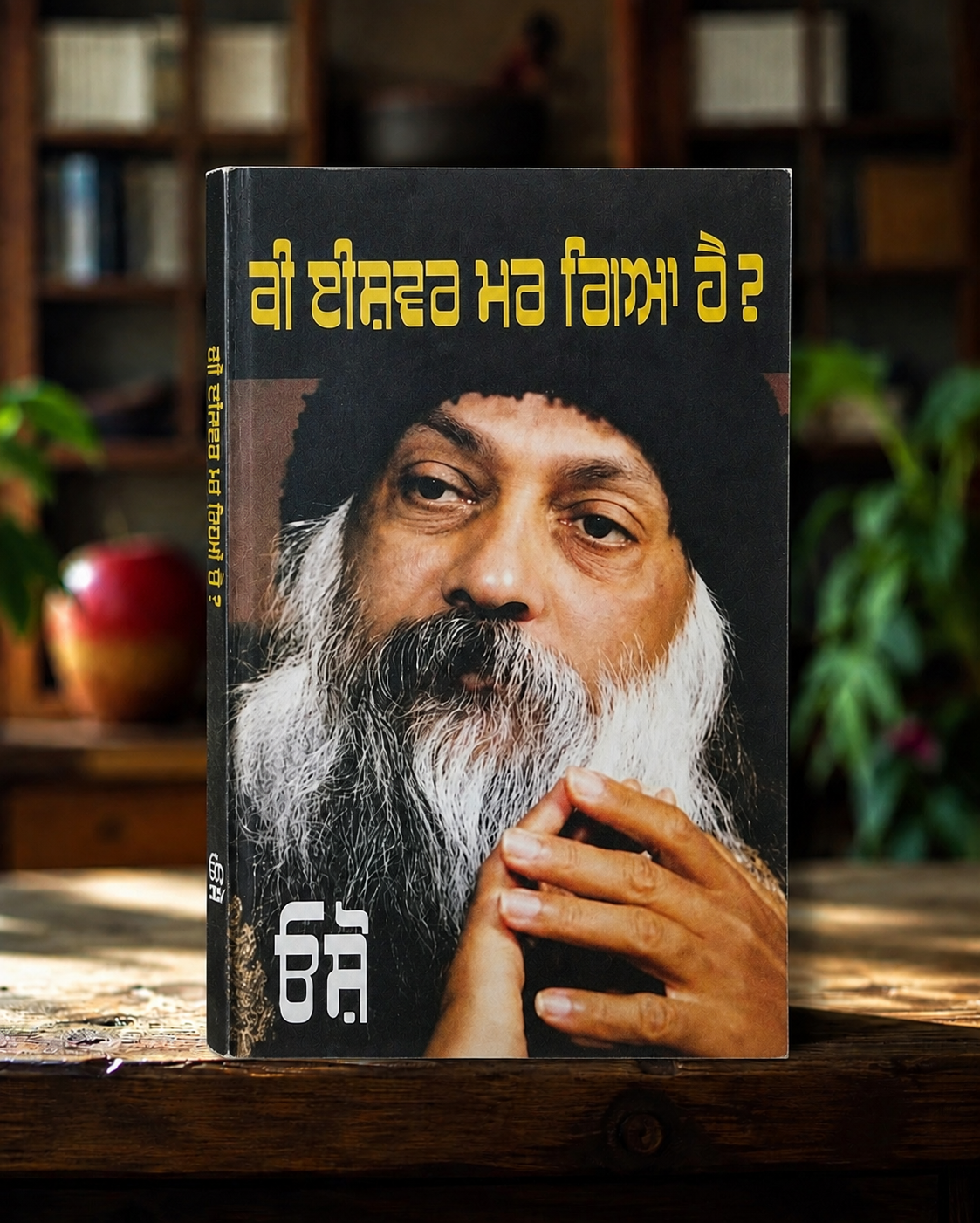
Ki Ishwar Mar Geya Hai? (ਕੀ ਈਸ਼ਵਰ ਮਰ ਗਿਆ ਹੈ?) – Osho
A Thought-Provoking Spiritual Work on God, Belief, Consciousness, and the Search for Truth
Ki Ishwar Mar Geya Hai? (ਕੀ ਈਸ਼ਵਰ ਮਰ ਗਿਆ ਹੈ?) is the Punjabi translation of Osho's thought-provoking spiritual work Kya Ishwar Mar Gaya Hai? The book explores one of the most fundamental questions of human existence: what do we actually mean when we speak about God? Through reflective discussions and spiritual questioning, Osho encourages readers to examine inherited beliefs, religious ideas, and their own understanding of existence.
Rather than providing a conventional religious explanation, Ki Ishwar Mar Geya Hai? challenges readers to look deeper into the nature of belief itself. The work questions whether the image of God created by human beings can truly represent the divine and encourages readers to distinguish between an idea about God and a direct experience of truth.
This makes Ki Ishwar Mar Geya Hai? a compelling read for anyone interested in spirituality, philosophy, consciousness, meditation, and questions about existence. The Punjabi edition brings these ideas to Punjabi readers in a familiar and expressive language.
Questioning What We Believe
At the centre of Ki Ishwar Mar Geya Hai? is the importance of questioning. Human beings often inherit beliefs from family, society, culture, and religious traditions without examining where those beliefs come from. Osho's approach encourages readers to question these assumptions rather than accepting them automatically.
The book asks readers to consider whether the God they imagine is something they have personally experienced or an image created by society and tradition. This distinction becomes an important part of the spiritual exploration presented in Ki Ishwar Mar Geya Hai?
The purpose of such questioning is not simply to reject belief. Instead, the book encourages a deeper search for truth. It invites readers to move from borrowed ideas toward personal understanding and direct awareness.
This makes Ki Ishwar Mar Geya Hai? especially interesting for readers who enjoy philosophical works that challenge conventional thinking and encourage independent reflection.
Exploring the Idea of God
The concept of God has been interpreted in countless ways throughout human history. Different cultures, religions, and individuals have developed different understandings of the divine. Ki Ishwar Mar Geya Hai? examines this subject from a questioning and experiential perspective.
Osho challenges the idea of treating a human-created image or concept as the ultimate reality. The book encourages readers to ask whether true spirituality can be reduced to external forms, rituals, symbols, or inherited definitions.
According to the central perspective presented in the work, something created by the human mind cannot simply be assumed to be the ultimate truth. This idea encourages readers to investigate their own beliefs and understand the difference between religious concepts and direct spiritual experience.
For readers interested in philosophy and spirituality, this makes Ki Ishwar Mar Geya Hai? a stimulating book that raises questions rather than encouraging passive acceptance.
Spirituality and Personal Experience
A major aspect of Ki Ishwar Mar Geya Hai? is the emphasis on personal experience. Instead of depending entirely on what others say about spirituality, the book encourages readers to explore consciousness and existence for themselves.
This approach connects naturally with themes of meditation and awareness. Spirituality becomes something that can be explored through observation, silence, awareness, and inner inquiry rather than simply through intellectual belief.
The book encourages readers to become more conscious of their thoughts and assumptions. By observing the mind and questioning inherited ideas, a person may begin to understand how beliefs influence perception and behaviour.
This makes Ki Ishwar Mar Geya Hai? particularly relevant to readers who are interested in meditation, self-awareness, and philosophical reflection.
Religion, Belief, and Inner Freedom
Another important dimension of Ki Ishwar Mar Geya Hai? is its examination of organized belief and religious concepts. The book raises questions about whether spirituality should depend upon fear, tradition, social pressure, or unquestioned acceptance.
The central message encourages readers to discover a more personal relationship with truth. Instead of simply accepting someone else's interpretation of existence, readers are encouraged to investigate their own consciousness.
This perspective gives Ki Ishwar Mar Geya Hai? a strong emphasis on inner freedom. Freedom, in this context, involves the courage to question, observe, and discover rather than simply following inherited ideas.
A Book That Encourages Deep Reflection
Ki Ishwar Mar Geya Hai? is not necessarily a book to be rushed through. Its questions are designed to encourage reflection. Readers may find themselves returning to particular ideas and considering them from different perspectives.
The book can be especially meaningful during quiet moments when readers have time to think about their own beliefs and experiences. Different readers may arrive at different interpretations, which is part of the value of philosophical literature.
The Punjabi edition makes these reflections accessible to readers who prefer experiencing spiritual and philosophical literature in Punjabi. It offers an opportunity to explore Osho's ideas while remaining connected to the richness of the Punjabi language.
Themes Explored in Ki Ishwar Mar Geya Hai?
Throughout Ki Ishwar Mar Geya Hai?, readers encounter several important spiritual and philosophical themes, including:
- The concept of God
- Spirituality and consciousness
- Faith and belief
- Religious traditions
- Meditation and awareness
- Inner freedom
- The search for truth
- Human-created concepts of God
- Self-inquiry
- Personal experience
- The nature of existence
- Questioning and awareness
- Spiritual transformation
- Inner silence
- Freedom from inherited beliefs
These themes make Ki Ishwar Mar Geya Hai? a valuable choice for readers who enjoy philosophical, spiritual, and reflective literature.
Who Should Read Ki Ishwar Mar Geya Hai?
Ki Ishwar Mar Geya Hai? is an excellent choice for readers interested in:
- Osho's spiritual writings
- Punjabi spiritual literature
- Philosophy
- Meditation
- Consciousness
- Self-discovery
- Religious questioning
- Indian spiritual thought
- Personal transformation
- The search for truth
Whether you already follow Osho's writings or are simply curious about philosophical questions surrounding God and existence, Ki Ishwar Mar Geya Hai? offers an intellectually engaging and reflective reading experience.
The book ultimately invites readers to ask a fundamental question: are we living according to beliefs we have inherited, or are we willing to explore truth for ourselves? Through this questioning approach, Ki Ishwar Mar Geya Hai? opens a deeper conversation about God, consciousness, spirituality, and the human search for meaning.
The Deeper Questions in Ki Ishwar Mar Geya Hai?
The most significant quality of Ki Ishwar Mar Geya Hai? (ਕੀ ਈਸ਼ਵਰ ਮਰ ਗਿਆ ਹੈ?) is its willingness to question ideas that people often accept without examination. The book does not approach spirituality as something that must simply be inherited from previous generations. Instead, it encourages readers to investigate their own understanding of God, religion, consciousness, and existence.
The question contained in the title itself is provocative. Rather than treating it as a simple statement, Ki Ishwar Mar Geya Hai? uses the question as an invitation to think. What does the idea of God mean to a person? Is God an external concept created by belief, or can spirituality become a direct experience? Can truth be discovered through personal awareness rather than borrowed from tradition?
These questions give the book its philosophical depth and encourage readers to examine their own assumptions.
Beyond Borrowed Beliefs
Human beings often inherit ideas about religion and spirituality from their families, communities, cultures, and surroundings. These beliefs can become so familiar that people may never stop to ask whether they truly understand them.
Ki Ishwar Mar Geya Hai? encourages readers to become aware of this process. It invites them to distinguish between believing something because they were told it and understanding something through personal inquiry.
This does not necessarily mean rejecting every tradition or belief. Instead, the book encourages a more conscious relationship with belief itself. Readers are invited to question, investigate, and discover rather than simply accept.
This approach makes Ki Ishwar Mar Geya Hai? particularly relevant for people who enjoy philosophical literature that challenges conventional assumptions and encourages independent thinking.
The Search for Direct Experience
One of the central ideas explored in Ki Ishwar Mar Geya Hai? is the difference between intellectual knowledge and direct experience. A person can read countless books about spirituality, listen to numerous teachings, and learn many religious concepts, yet still not have a direct understanding of what those ideas mean personally.
The book encourages readers to turn inward and explore consciousness through awareness and meditation. Instead of merely collecting spiritual information, readers are encouraged to experience and observe.
This emphasis on direct experience connects the philosophical questions of Ki Ishwar Mar Geya Hai? with the practical exploration of meditation and inner awareness. The search for truth becomes something personal rather than merely theoretical.
Meditation and Consciousness
Meditation provides an important perspective for understanding the deeper ideas presented in Ki Ishwar Mar Geya Hai? By becoming more aware of thoughts, emotions, and mental patterns, individuals can begin to observe how their minds operate.
The book encourages readers to consider whether constant mental activity prevents them from experiencing life directly. Thoughts about the past, future, beliefs, fears, and expectations can occupy much of human attention.
Through greater awareness, readers may begin to notice these patterns without immediately identifying themselves with every thought. This reflective approach creates a connection between spirituality and consciousness.
For readers interested in meditation, Ki Ishwar Mar Geya Hai? offers philosophical questions that can complement personal exploration and introspection.
Freedom From Fear and Conditioning
Another important theme is inner freedom. Human behaviour is often influenced by fear, social conditioning, expectations, and the desire for security. These influences can shape beliefs and decisions without people being fully aware of them.
Ki Ishwar Mar Geya Hai? encourages readers to examine these influences and become more conscious of the forces shaping their thinking. The idea of freedom presented through this perspective is not simply external freedom but freedom of awareness.
When a person begins to recognize conditioned patterns, they may become more capable of questioning them. This can create space for personal growth and a deeper understanding of one's own consciousness.
Spirituality as an Individual Journey
The book presents spirituality as something that cannot simply be reduced to external authority. Every individual's search for truth is personal, and Ki Ishwar Mar Geya Hai? encourages readers to explore their own experience rather than depending entirely on someone else's conclusions.
This makes the work particularly appealing to readers who are curious about spirituality but do not want to approach it only through conventional definitions.
The questions raised in Ki Ishwar Mar Geya Hai? can remain with readers long after they finish the book. They encourage continued reflection on belief, consciousness, existence, and the meaning of spiritual experience.
Life Lessons and Reflections
The ideas explored throughout Ki Ishwar Mar Geya Hai? can inspire readers to consider several important principles:
- Questioning can be the beginning of deeper understanding.
- Awareness is more powerful than unconscious habit.
- Personal experience can deepen intellectual knowledge.
- Meditation can encourage self-observation.
- Freedom begins with awareness of conditioning.
- Spirituality can involve exploration rather than blind acceptance.
- Inner silence creates space for reflection.
- Understanding the mind can transform one's relationship with life.
- Truth is worth exploring personally rather than simply borrowing from others.
- Self-inquiry can lead to greater clarity and awareness.
These reflections make Ki Ishwar Mar Geya Hai? valuable for readers interested in spirituality, philosophy, and personal growth.
Who Should Read Ki Ishwar Mar Geya Hai?
Ki Ishwar Mar Geya Hai? is an excellent choice for readers who enjoy:
- Osho's books
- Punjabi spiritual literature
- Philosophy and spirituality
- Meditation
- Consciousness studies
- Self-inquiry
- Indian spiritual thought
- Books questioning religious beliefs
- Personal transformation
- Reflective and philosophical writing
It can be particularly interesting for readers who enjoy books that raise difficult questions instead of providing simple answers. The work encourages independent thought and personal exploration, making it suitable for both experienced readers of spiritual literature and those beginning their journey into philosophical inquiry.
Why Add Ki Ishwar Mar Geya Hai? to Your Library?
A thought-provoking spiritual book can become more meaningful as the reader's own understanding develops, and Ki Ishwar Mar Geya Hai? offers this possibility. The questions raised in the book may appear different at different stages of life because personal experiences influence how we understand spirituality, belief, relationships, and existence.
The Punjabi edition makes these philosophical reflections accessible to Punjabi readers and provides an opportunity to explore Osho's ideas through Punjabi language and expression.
For a personal library focused on spirituality, philosophy, meditation, consciousness, or Indian thought, Ki Ishwar Mar Geya Hai? is a meaningful addition. It is a book that can be read slowly, discussed with others, and revisited whenever new questions about life and existence arise.
Final Thoughts
Ki Ishwar Mar Geya Hai? (ਕੀ ਈਸ਼ਵਰ ਮਰ ਗਿਆ ਹੈ?) is a provocative and reflective spiritual work that encourages readers to question inherited beliefs and explore the deeper meaning of God, consciousness, spirituality, and existence. Rather than asking readers to accept a predetermined answer, the book opens a space for personal inquiry and thoughtful exploration.
Through its focus on awareness, meditation, inner freedom, self-inquiry, and direct experience, Ki Ishwar Mar Geya Hai? encourages readers to look beyond borrowed concepts and develop a more conscious relationship with their own inner world.
For readers interested in Osho, Punjabi spiritual literature, philosophy, meditation, consciousness, and the search for truth, this book offers a thought-provoking reading experience. Its central questions can remain with the reader long after the final page, encouraging continued reflection on what we believe, why we believe it, and whether true spiritual understanding begins when we become willing to look within ourselves.