

Kalam Kitaab
Baba Nanak ( ਬਾਬਾ ਨਾਨਕ ) Book - Sohan Singh Seetal
Baba Nanak ( ਬਾਬਾ ਨਾਨਕ ) Book - Sohan Singh Seetal
Couldn't load pickup availability
Share
"ਬਾਬਾ ਨਾਨਕ" ਸੋਹਣ ਸਿੰਘ ਸੀਤਲ ਦੀ ਇੱਕ ਮਹੱਤਵਪੂਰਨ ਪੰਜਾਬੀ ਰਚਨਾ ਹੈ ਜੋ ਸ੍ਰੀ ਗੁਰੂ ਨਾਨਕ ਦੇਵ ਜੀ ਦੇ ਜੀਵਨ, ਵਿਚਾਰਾਂ, ਯਾਤਰਾਵਾਂ ਅਤੇ ਮਨੁੱਖਤਾ ਨੂੰ ਦਿੱਤੇ ਮਹਾਨ ਸੰਦੇਸ਼ ਨੂੰ ਸਾਹਿਤਕ ਅੰਦਾਜ਼ ਵਿੱਚ ਪੇਸ਼ ਕਰਦੀ ਹੈ। ਬਾਬਾ ਨਾਨਕ ਵਿੱਚ ਗੁਰੂ ਨਾਨਕ ਸਾਹਿਬ ਦੀ ਸ਼ਖ਼ਸੀਅਤ, ਉਨ੍ਹਾਂ ਦੀ ਸੱਚ, ਸਮਾਨਤਾ, ਮਨੁੱਖਤਾ ਅਤੇ ਭਾਈਚਾਰੇ ਦੀ ਸਿੱਖਿਆ ਨੂੰ ਸਮਝਣ ਦੀ ਕੋਸ਼ਿਸ਼ ਕੀਤੀ ਗਈ ਹੈ। ਸੋਹਣ ਸਿੰਘ ਸੀਤਲ ਦੀ ਸਰਲ ਅਤੇ ਪ੍ਰਭਾਵਸ਼ਾਲੀ ਲਿਖਤ ਬਾਬਾ ਨਾਨਕ ਨੂੰ ਸਿੱਖ ਇਤਿਹਾਸ, ਗੁਰਮਤਿ ਅਤੇ ਪੰਜਾਬੀ ਸਾਹਿਤ ਵਿੱਚ ਦਿਲਚਸਪੀ ਰੱਖਣ ਵਾਲੇ ਪਾਠਕਾਂ ਲਈ ਇੱਕ ਦਿਲਚਸਪ ਪੜ੍ਹਾਈ ਬਣਾਉਂਦੀ ਹੈ।
"Baba Nanak" by Sohan Singh Seetal is a Punjabi literary work that explores the life, personality, teachings, and enduring legacy of Guru Nanak Dev Ji. Baba Nanak presents the message of truth, equality, humanity, compassion, and spiritual awareness associated with Guru Nanak's life and teachings. Through Sohan Singh Seetal's accessible and engaging writing, Baba Nanak offers readers an opportunity to connect with an important chapter of Sikh history and understand the timeless relevance of Guru Nanak Dev Ji's message.
Book Title: ਬਾਬਾ ਨਾਨਕ (Baba Nanak)
Author: Sohan Singh Seetal
Language: Punjabi (Gurmukhi)
Genre: Sikh History / Biography / Gurmat Literature / Punjabi Literature
Available at: Kalam Kitaab
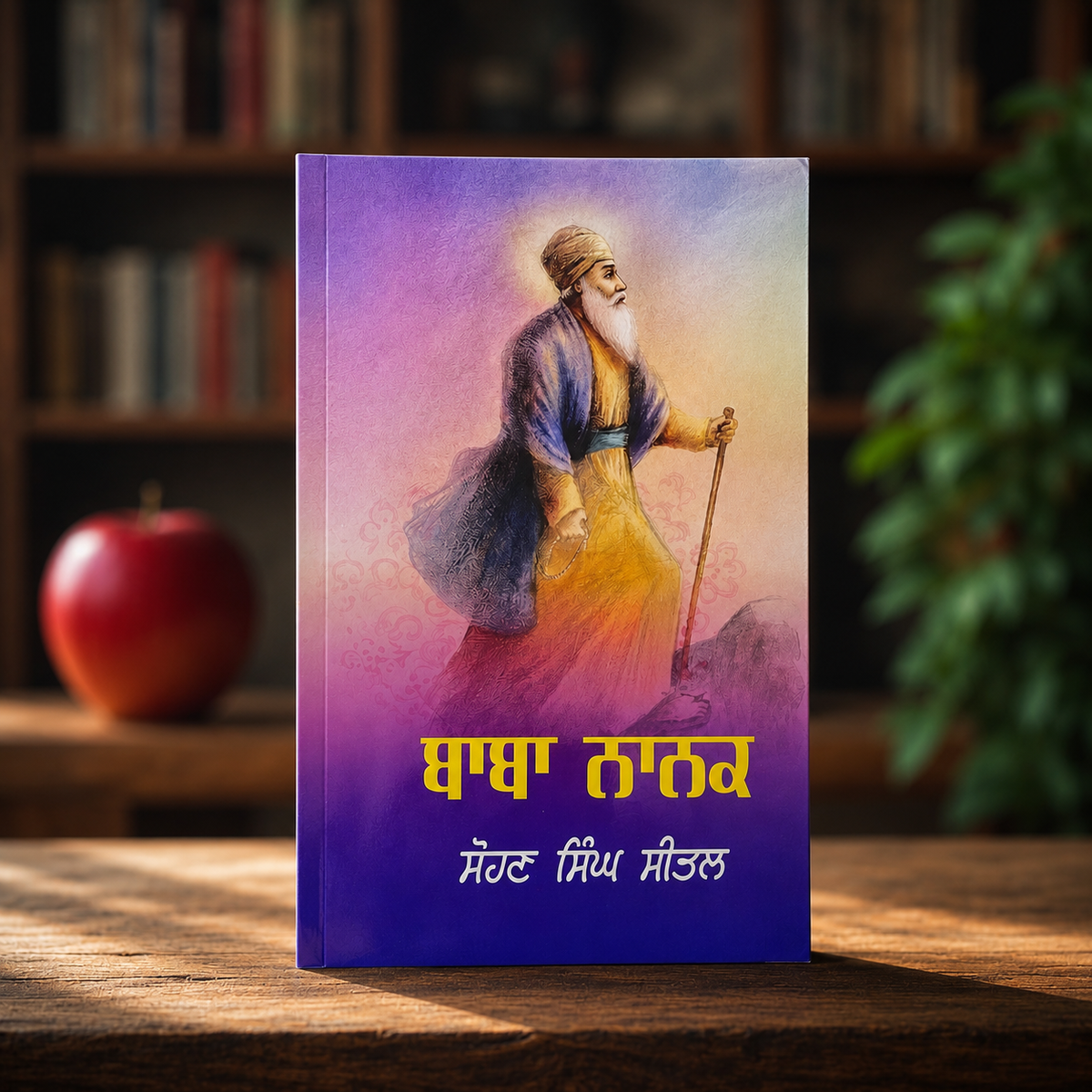
Baba Nanak Book – Sohan Singh Seetal
Baba Nanak – Sohan Singh Seetal's Punjabi Literary Work on Guru Nanak Dev Ji
Baba Nanak by Sohan Singh Seetal is a Punjabi literary work centred on the life, personality, teachings, spiritual vision, and remarkable journey of Guru Nanak Dev Ji, the founder of the Sikh faith. The title Baba Nanak itself carries a sense of affection, reverence, simplicity, and closeness toward one of the most influential spiritual personalities in the history of Punjab and the Indian subcontinent.
Baba Nanak by Sohan Singh Seetal brings the reader toward the world of Guru Nanak Dev Ji, whose message transcended boundaries of caste, religion, social status, language, and geography. Baba Nanak represents a personality whose teachings continue to influence millions of people and whose ideas remain deeply relevant to questions of humanity, equality, truth, compassion, honest living, and spiritual awareness.
The Meaning and Significance of Baba Nanak
The title Baba Nanak is simple, familiar, and deeply rooted in Punjabi culture.
The word Baba carries a sense of respect and affection, while Nanak refers to Guru Nanak Dev Ji.
For generations, people in Punjab and beyond have remembered Guru Nanak Dev Ji with affection through the name Baba Nanak.
Therefore, Baba Nanak is not merely the name of a historical personality. It represents an entire spiritual and philosophical tradition.
Baba Nanak and the Life of Guru Nanak Dev Ji
Understanding Baba Nanak requires understanding the extraordinary life of Guru Nanak Dev Ji.
Guru Nanak Dev Ji was born at a time when society was affected by social divisions, religious differences, caste distinctions, ritualism, inequality, and various forms of discrimination.
The life and teachings associated with Baba Nanak challenged narrow divisions and emphasized the fundamental unity of humanity.
Baba Nanak by Sohan Singh Seetal gives readers an opportunity to engage with this remarkable personality through Punjabi literary expression.
Baba Nanak and the Message of Humanity
One of the strongest ideas associated with Baba Nanak is the dignity of every human being.
The teachings of Guru Nanak Dev Ji emphasized that people should not be judged according to caste, social position, wealth, or external identity.
The message of Baba Nanak places human character and conduct at the centre.
A person's worth is not determined simply by what society says about them.
Instead, Baba Nanak directs attention toward truth, compassion, humility, honest living, and remembrance of the Divine.
Baba Nanak and Equality
Equality is a central dimension of the message associated with Baba Nanak.
Guru Nanak Dev Ji challenged social practices that created divisions between people.
The idea behind Baba Nanak is that humanity shares a fundamental spiritual connection.
This message remains relevant even today because societies continue to struggle with inequality, prejudice, discrimination, and social divisions.
Baba Nanak therefore represents not only a historical figure but also a continuing message of human equality.
Baba Nanak and Truth
Truth occupies an important place in the teachings associated with Baba Nanak.
Truth is not simply about speaking accurate words.
It also involves living truthfully.
A person may speak about spirituality, but their actions reveal their actual values.
Baba Nanak emphasizes the importance of bringing one's beliefs into everyday conduct.
Truth becomes meaningful when it influences how a person lives.
Baba Nanak and Honest Living
The idea of honest living is another important part of the message of Baba Nanak.
Spirituality is not presented as something completely separate from everyday responsibilities.
Work, family, society, relationships, and ethical conduct all matter.
Baba Nanak encourages people to live honestly while fulfilling their responsibilities.
This makes the teachings of Baba Nanak practical as well as spiritual.
Baba Nanak and Naam
The spiritual dimension of Baba Nanak is closely connected with remembrance of the Divine.
Naam is central to Sikh spiritual thought.
Remembering the Divine is not merely a ritual activity.
It is connected with awareness, humility, devotion, and the transformation of one's inner life.
The message of Baba Nanak encourages people to develop a deeper relationship with the Divine while remaining engaged with the world.
Baba Nanak and Seva
Service is another important value associated with Baba Nanak.
Seva means selfless service.
It encourages individuals to help others without making personal recognition the primary objective.
The spirit of Baba Nanak places importance on serving humanity and recognizing the dignity of others.
Seva therefore becomes both a social and spiritual practice.
Baba Nanak and Sharing
Sharing is also closely connected with the social philosophy associated with Baba Nanak.
A meaningful life is not based only on personal accumulation.
People have responsibilities toward others.
Sharing resources, helping those in need, and contributing to the well-being of the community are important expressions of social responsibility.
The message of Baba Nanak therefore connects spirituality with social ethics.
Baba Nanak and Langar
The institution of Langar is one of the most visible expressions of equality and community associated with Sikh tradition.
People from different backgrounds sit together and share food.
The practice challenges social hierarchy and emphasizes the equality of human beings.
The spirit of Baba Nanak can be understood through this emphasis on community, sharing, service, and equality.
Baba Nanak and Social Reform
The message of Baba Nanak was deeply connected with social transformation.
Rather than accepting social divisions simply because they were traditional, Guru Nanak Dev Ji questioned practices that contradicted human dignity and spiritual truth.
Baba Nanak therefore represents a reformative voice that challenged hypocrisy and encouraged people to live according to genuine values.
Baba Nanak and Ritualism
Baba Nanak placed greater emphasis on genuine spiritual living than on empty external rituals.
The central question is not simply whether someone performs a particular practice.
The deeper question is whether the practice changes the person's character.
Baba Nanak encourages readers to consider the difference between outward appearance and inner transformation.
Baba Nanak and Inner Spirituality
Spirituality in the message of Baba Nanak is not restricted to a particular place or time.
It is connected with everyday life.
A person can remember the Divine while working.
They can practice humility while interacting with others.
They can live truthfully while fulfilling family responsibilities.
This integration of spiritual awareness with everyday life makes Baba Nanak particularly relevant.
Baba Nanak and the Unity of Humanity
One of the most enduring messages associated with Baba Nanak is the idea that humanity should not be divided by superficial differences.
People may belong to different communities.
They may speak different languages.
They may follow different traditions.
But human dignity remains universal.
The message of Baba Nanak encourages people to look beyond these divisions and recognize shared humanity.
Baba Nanak and Religious Harmony
The life and travels of Guru Nanak Dev Ji are associated with interactions across different religious and cultural environments.
The message of Baba Nanak was not limited by narrow religious boundaries.
It emphasized spiritual truth, human dignity, compassion, and devotion.
This makes Baba Nanak relevant to discussions about religious harmony and peaceful coexistence.
Baba Nanak and the Udasis
The journeys traditionally associated with Guru Nanak Dev Ji are known as the Udasis.
These travels took him to different regions and exposed him to diverse communities, traditions, and religious practices.
The travelling life of Baba Nanak demonstrates the wide geographical and intellectual reach of his message.
The purpose was not simply travel.
It was engagement, dialogue, questioning, and spiritual communication.
Baba Nanak and Dialogue
Dialogue was an important part of Guru Nanak Dev Ji's approach.
Rather than limiting spiritual understanding to one group, Baba Nanak engaged with people from different backgrounds.
Questions, conversations, and exchanges created opportunities to examine beliefs and practices.
This spirit of dialogue remains highly relevant in today's divided world.
Baba Nanak and Human Values
The message of Baba Nanak can be connected with values such as:
- Truth
- Equality
- Compassion
- Humility
- Honest living
- Service
- Sharing
- Responsibility
- Spiritual awareness
- Respect
- Human dignity
- Community
- Justice
These values make Baba Nanak by Sohan Singh Seetal relevant not only to readers interested in Sikh history but also to readers interested in ethical and meaningful living.
Why Read Baba Nanak?
Baba Nanak by Sohan Singh Seetal can appeal to readers interested in Guru Nanak Dev Ji, Sikh history, Punjabi literature, Sikh philosophy, spirituality, social reform, equality, human values, and the history and culture of Punjab.
The strength of Baba Nanak lies in bringing attention to a personality whose message continues to influence the way people think about spirituality and humanity.
Baba Nanak – Understanding the Deeper Message
The importance of Baba Nanak extends far beyond the historical period in which Guru Nanak Dev Ji lived.
The world has changed enormously since the fifteenth century.
Technology has transformed communication.
Societies have become more interconnected.
Cities have expanded.
Political systems have changed.
Yet many of the problems that affect humanity remain familiar.
Inequality exists.
Social divisions exist.
Religious intolerance exists.
Materialism exists.
Dishonesty exists.
Conflict exists.
This is why the message of Baba Nanak remains meaningful.
Baba Nanak and Modern Society
Modern society often places great importance on achievement, wealth, status, and competition.
People are encouraged to measure success through external accomplishments.
But Baba Nanak offers a different way of thinking.
Material success has value, but it should not become the only measure of a meaningful life.
Character matters.
Honesty matters.
Compassion matters.
Service matters.
Spiritual awareness matters.
The message of Baba Nanak therefore remains relevant in the modern world.
Baba Nanak and the Balance of Spirituality and Daily Life
One of the remarkable aspects of Baba Nanak is the integration of spiritual awareness with ordinary life.
People do not necessarily have to withdraw completely from society to pursue spiritual understanding.
They can work.
They can have families.
They can participate in community life.
They can fulfill responsibilities.
And they can still cultivate spiritual awareness.
This balance is an important part of the philosophy associated with Baba Nanak.
Baba Nanak and the Dignity of Work
Honest work is an important principle associated with Sikh thought.
Work provides more than income.
It creates dignity, responsibility, independence, and contribution.
The message of Baba Nanak encourages people to earn through honest effort rather than exploitation or dishonesty.
This principle remains relevant to every generation.
Baba Nanak and Compassion
Compassion means recognizing the suffering of others and responding with humanity.
The message of Baba Nanak encourages people to look beyond themselves.
A person's spiritual development is not complete if it does not influence how they treat others.
Compassion therefore becomes a practical expression of spirituality.
Baba Nanak and Humility
Humility is another important quality associated with Baba Nanak.
Knowledge can create pride.
Wealth can create pride.
Power can create pride.
Social status can create pride.
But humility allows a person to recognize that they are part of something greater than themselves.
The message of Baba Nanak encourages people to avoid ego and develop genuine humility.
Baba Nanak and Ego
Ego can become a barrier to spiritual growth.
When people become overly attached to their status, possessions, opinions, or achievements, they can lose sight of deeper values.
Baba Nanak challenges this tendency by emphasizing humility and connection with the Divine.
The reduction of ego becomes an important part of inner development.
Baba Nanak and Gender Equality
The message associated with Baba Nanak includes a powerful rejection of the idea that women should be treated as inferior.
The dignity of women and the importance of recognizing their place in society form an important part of the broader social message associated with Guru Nanak Dev Ji.
This makes Baba Nanak highly relevant to discussions about equality and social dignity.
Baba Nanak and Caste
Caste-based discrimination was deeply embedded in society during Guru Nanak Dev Ji's time.
The message of Baba Nanak challenged the idea that spiritual or human worth should be determined by birth.
A person's character and actions matter more than inherited social status.
This principle remains relevant because discrimination and social inequality continue to exist in different forms.
Baba Nanak and Community
The teachings associated with Baba Nanak emphasize the importance of community.
Spirituality is not simply an individual pursuit.
People also have responsibilities toward one another.
Through sharing, service, collective prayer, and community institutions, individuals become part of a larger social and spiritual network.
Baba Nanak and Seva
The principle of Seva remains one of the most recognizable expressions of the spirit of Baba Nanak.
Selfless service encourages people to help others without expecting personal reward.
Seva can take many forms.
Helping someone in need.
Serving food.
Supporting a community.
Offering time.
Providing assistance.
The value lies in the spirit of service.
Baba Nanak and Sharing With Others
The principle of sharing reflects another dimension of Baba Nanak.
People are encouraged not to live entirely for personal accumulation.
Those who have more can contribute toward the well-being of others.
This creates a more compassionate and balanced community.
Baba Nanak and the Rejection of Hypocrisy
One of the most powerful aspects of Baba Nanak is the emphasis on sincerity.
It is easy to appear spiritual.
It is more difficult to live according to spiritual principles.
A person can perform rituals while behaving dishonestly.
A person can speak about morality while exploiting others.
Baba Nanak challenges this contradiction.
True spirituality must influence conduct.
Baba Nanak and Inner Transformation
The deeper purpose of spirituality is transformation.
A person should become more truthful.
More compassionate.
More humble.
More responsible.
More aware.
More connected with others.
This inner transformation represents one of the most important dimensions of Baba Nanak.
Baba Nanak and the Importance of Questioning
Guru Nanak Dev Ji's approach encouraged questioning of practices that lacked genuine meaning.
Questioning does not necessarily mean disrespect.
It can be a search for truth.
Baba Nanak encourages people to distinguish between meaningful spirituality and practices followed simply because they are traditional.
This makes the message of Baba Nanak intellectually engaging.
Baba Nanak and Spiritual Freedom
Spirituality should not be reduced to fear.
The message of Baba Nanak emphasizes understanding, devotion, remembrance, and ethical living.
A person develops a relationship with the Divine through sincere practice and awareness.
This gives spirituality a dimension of freedom and personal realization.
Baba Nanak and Universal Humanism
The message of Baba Nanak extends beyond one community.
Its emphasis on equality, compassion, truth, service, and human dignity has universal relevance.
A person does not need to belong to one particular background to appreciate the ethical message associated with Baba Nanak.
Baba Nanak and Punjab
For Punjabi readers, Baba Nanak also carries deep cultural significance.
Guru Nanak Dev Ji's life is closely connected with the cultural and historical development of Punjab.
His teachings influenced Punjabi language, literature, social institutions, community practices, and spiritual thought.
Baba Nanak therefore occupies an important place within Punjabi cultural memory.
Baba Nanak and Punjabi Literature
Punjabi literature has repeatedly explored the life and teachings of Guru Nanak Dev Ji.
Baba Nanak by Sohan Singh Seetal belongs to this larger literary tradition of engaging with the life and personality of Guru Nanak Dev Ji through Punjabi expression.
For readers interested in Punjabi literary works about Sikh history and spirituality, Baba Nanak can therefore be an important addition.
Major Themes in Baba Nanak
The central ideas associated with Baba Nanak by Sohan Singh Seetal can be explored through:
- Baba Nanak and Guru Nanak Dev Ji
- Baba Nanak and spirituality
- Baba Nanak and equality
- Baba Nanak and truth
- Baba Nanak and honest living
- Baba Nanak and Naam
- Baba Nanak and Seva
- Baba Nanak and sharing
- Baba Nanak and Langar
- Baba Nanak and social reform
- Baba Nanak and human dignity
- Baba Nanak and humility
- Baba Nanak and ego
- Baba Nanak and caste equality
- Baba Nanak and gender equality
- Baba Nanak and religious harmony
- Baba Nanak and the Udasis
- Baba Nanak and Punjabi culture
- Baba Nanak and Sikh history
- Baba Nanak and universal humanity
Who Should Read Baba Nanak?
Baba Nanak can be an appropriate choice for readers interested in Guru Nanak Dev Ji, Sikh history, Sikh philosophy, Punjabi literature, Punjabi culture, spirituality, social reform, equality, human values, and the history of Punjab.
Students, history enthusiasts, Punjabi literature readers, spiritual readers, and those interested in the life and teachings of Guru Nanak Dev Ji may find Baba Nanak by Sohan Singh Seetal especially meaningful.
Why Read Baba Nanak by Sohan Singh Seetal?
Baba Nanak by Sohan Singh Seetal brings the reader toward the life and message of a personality whose influence extends far beyond his own historical period.
The importance of Baba Nanak lies not only in remembering Guru Nanak Dev Ji as a historical figure but also in considering the continuing relevance of his values.
Truth.
Equality.
Honest work.
Sharing.
Service.
Humility.
Compassion.
Spiritual awareness.
These principles continue to have meaning in contemporary life.
Why Add Baba Nanak to Your Punjabi Book Collection?
Baba Nanak can be a meaningful addition to a Punjabi book collection because it brings together literature, history, spirituality, culture, and human values.
For readers interested in Guru Nanak Dev Ji, Baba Nanak provides an opportunity to engage with his life and personality through the literary perspective of Sohan Singh Seetal.
Baba Nanak is also relevant for readers who want to understand how the ideas associated with Guru Nanak Dev Ji continue to influence Punjabi culture and Sikh thought.
Final Thoughts
Baba Nanak by Sohan Singh Seetal is a Punjabi literary work centred on the life, personality, teachings, spirituality, and social message associated with Guru Nanak Dev Ji.
The title Baba Nanak itself reflects the deep affection and reverence with which Guru Nanak Dev Ji is remembered across generations.
The world of Baba Nanak is connected with some of the most enduring human values: truth, equality, compassion, humility, honest living, service, sharing, spiritual awareness, and human dignity.
The message of Baba Nanak remains relevant because the challenges faced by humanity have not disappeared. Social divisions, inequality, prejudice, materialism, conflict, and intolerance continue to affect society.
Against these challenges, Baba Nanak offers a message centred on recognizing the dignity of every human being and living a life guided by truth, responsibility, compassion, and spiritual awareness.
For readers interested in Punjabi literature, Sikh history, Guru Nanak Dev Ji, Punjabi culture, spirituality, social reform, equality, human values, and meaningful historical literature, Baba Nanak by Sohan Singh Seetal can be a valuable addition to their collection.
Ultimately, Baba Nanak is not only about remembering a historical personality. Baba Nanak represents a continuing message — a call toward truthful living, humility, equality, service, compassion, and recognition of the Divine within the human experience.
Baba Nanak by Sohan Singh Seetal therefore offers readers an opportunity to revisit the life and message of Guru Nanak Dev Ji and reflect on why the values associated with Baba Nanak continue to resonate across generations.