


Kalam Kitaab
ਸਮਾਧੀ ਕਮਲ (Samadhi Kamal) Book – Osho
ਸਮਾਧੀ ਕਮਲ (Samadhi Kamal) Book – Osho
Couldn't load pickup availability
Share
"ਸਮਾਧੀ ਕਮਲ" is Osho's poetic and profoundly mystical Punjabi discourse series on the lotus of samadhi ("samadhi kamal") – the ultimate flowering of consciousness, where the soul rises above the mud of worldly illusion, opens in pure awareness, and blooms in divine ecstasy. Drawing from Tantra, Zen, Sufi, and Sikh mysticism, Osho explores how meditation transforms the muddy mind into the thousand-petaled lotus of enlightenment.
"ਸਮਾਧੀ ਕਮਲ" ਓਸ਼ੋ ਦੀਆਂ ਕਾਵਿ-ਭਰੀਆਂ ਅਤੇ ਰਹੱਸਮਈ ਪੰਜਾਬੀ ਗੱਲਬਾਤਾਂ ਹਨ ਜੋ ਸਮਾਧੀ ਦੇ ਕਮਲ ਬਾਰੇ ਹਨ – ਚੇਤਨਤਾ ਦਾ ਅੰਤਿਮ ਫੁੱਲਣਾ, ਜਿੱਥੇ ਆਤਮਾ ਸੰਸਾਰੀ ਭਰਮ ਦੀ ਕੀਚੜ ਤੋਂ ਉੱਠ ਕੇ ਸ਼ੁੱਧ ਜਾਗਰੂਕਤਾ ਮੇਂ ਖਿੜਦੀ ਹੈ ਅਤੇ ਰੱਬੀ ਅਨੰਦ ਮੇਂ ਖਿੜ ਜਾਂਦੀ ਹੈ। ਤੰਤਰ, ਜ਼ੈਨ, ਸੂਫੀ ਅਤੇ ਸਿੱਖ ਰਹਿਸਵਾਦ ਤੋਂ ਲੈ ਕੇ ਓਸ਼ੋ ਧਿਆਨ ਰਾਹੀਂ ਕੀਚੜ ਵਾਲੇ ਮਨ ਨੂੰ ਹਜ਼ਾਰ ਪੱਤੀਆਂ ਵਾਲੇ ਕਮਲ ਵਿੱਚ ਬਦਲਣ ਦੀ ਪ੍ਰਕਿਰਿਆ ਨੂੰ ਖੋਜਦੇ ਹਨ।
Book Title: ਸਮਾਧੀ ਕਮਲ (Samadhi Kamal)
Author: Osho
Language: Punjabi (Gurmukhi)
Genre: Spiritual Discourses (ਰੂਹਾਨੀ ਗੱਲਬਾਤ / ਤੰਤਰ-ਧਿਆਨ ਸੰਬੰਧੀ)
Available at: Kalam Kitaab


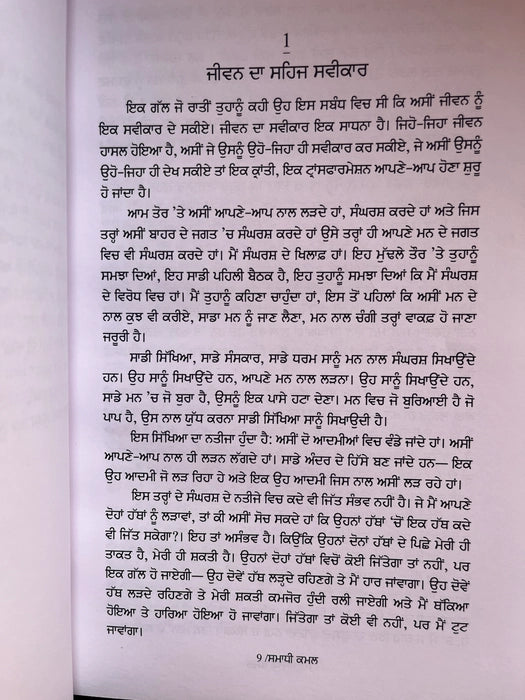
Samadhi Kamal Book: Osho's Mystical Vision of Enlightenment as Lotus Blooming
"Samadhi Kamal book" is one of Osho's most poetic, symbolic, and spiritually intoxicating series of Punjabi discourses, using the ancient metaphor of the lotus ("kamal") to describe samadhi – the ultimate state of superconsciousness. Osho (1931–1990), the visionary mystic who spoke on every path with unmatched beauty and depth, presents the lotus as the perfect symbol of enlightenment: it grows in mud (worldly illusion, suffering, ego), yet rises above the water (mind's turbulence), opens in the sunlight (pure awareness), and blooms in thousand petals of bliss.
The "Samadhi Kamal book" is not abstract philosophy – it is a living meditation on how ordinary human consciousness, rooted in mud, can transform through awareness, love, and surrender into the divine lotus of samadhi. Compiled from live discourses (originally in Hindi and translated into Punjabi), this series is deeply loved in Punjab for its resonance with Sikh and Tantric symbolism of inner flowering and divine realization.
Osho's Core Message: The Lotus of Samadhi
Osho in the "Samadhi Kamal book" reveals the journey of the soul through the lotus metaphor:
- Mud as the Starting Point – Human life begins in "mud" – desires, fears, conditioning, ego, suffering – the dark, messy world of samsara.
- Rising Above the Water – Through meditation and awareness, consciousness rises above emotional turbulence (the mind's waves) without being stained by it.
- Opening in Sunlight – When awareness turns inward, the bud of consciousness opens to the inner sun (pure witnessing, love, truth) – this is the beginning of samadhi.
- Thousand-Petaled Bloom – Full enlightenment is the thousand-petaled lotus – infinite dimensions of bliss, wisdom, compassion, and divine ecstasy unfolding simultaneously.
- No Escape from Mud – The lotus does not reject the mud – it uses it as nourishment. Similarly, don't reject life or sex or suffering – transform them through awareness.
Osho says: "The lotus is the only flower that grows in mud yet remains untouched by it – this is the way of the enlightened one."
Key Insights and Discourses in Samadhi Kamal Book
Mud – The World of Illusion
Osho describes how the mind lives in mud – attachment, greed, anger, fear – but the soul has the potential to rise.
Water – The Mind's Turbulence
Emotions, thoughts, desires are the water – meditation helps you rise above them without fighting.
Sun – Pure Awareness
The inner sun is witnessing consciousness – when it shines, the bud opens naturally.
Blooming in Samadhi
Samadhi is not a state to achieve – it is the natural flowering when all resistance ends. The thousand petals symbolize infinite consciousness.
Tantra and Lotus
Osho links Tantra to the lotus – using sexual energy (rooted in mud) as fuel to rise to higher centers, ultimately blooming in sahasrara (crown chakra).
Everyday Lotus Living
Live in the world (mud) but remain untouched – work, love, play, but stay rooted in awareness.
Osho's Style and Language in the Book
Osho's discourses in the "Samadhi Kamal book" are unusually poetic, gentle, and overflowing with beauty – speaking like a lover describing the opening of a flower. The Punjabi translation captures his lyrical flow, tenderness, and sudden flashes of insight, making the talks feel like a fragrant breeze.
He mixes Tantric symbolism, Kabir's poetry, Zen stories, Sufi metaphors, and Sikh references to "sahaj samadhi" to make the teaching vivid and alive.
Spiritual and Cultural Significance of the Book
"Samadhi Kamal book" resonates powerfully in Punjab – land of rivers, lotuses, and spiritual flowering (Sikhism's "kamal" as symbol of purity amid impurity). It bridges Tantric, Sufi, Sikh, and Zen traditions while offering Osho's radical clarity: enlightenment is not escape from life, but its total flowering.
Popular among meditators, Tantra seekers, and those drawn to devotional mysticism, it inspires inner transformation and celebration of life.
Osho's Legacy
Osho spoke extensively on samadhi – from Tantra to Zen – always presenting it as natural flowering rather than forced achievement. The "Samadhi Kamal book" captures his most beautiful vision: you are the lotus – rooted in mud, yet destined to bloom in infinite light.
His discourses continue helping seekers open their inner petals worldwide.
Why Samadhi Kamal Resonates Today
In a muddy, chaotic world full of suffering and distraction, the "Samadhi Kamal book" by Osho offers hope and beauty: no matter how dark the mud, the lotus within you can rise and bloom. It invites us to accept life fully, meditate deeply, and allow our consciousness to open in thousand-petaled ecstasy.
Poetic, mystical, and eternally uplifting, "Samadhi Kamal" is essential reading – a luminous reminder that enlightenment is not far away; it is the natural flowering of your own being.
Gentle, profound, and full of divine fragrance, the "Samadhi Kamal book" affirms Osho's genius in transforming the ancient lotus symbol into a living invitation to awaken.