


Kalam Kitaab
ਮੈਂ ਕਹਿਤਾ ਆਖਣ ਦੇਖੀ (Main Kehta Aakhan Dekhi) Book – Osho
ਮੈਂ ਕਹਿਤਾ ਆਖਣ ਦੇਖੀ (Main Kehta Aakhan Dekhi) Book – Osho
Couldn't load pickup availability
Share
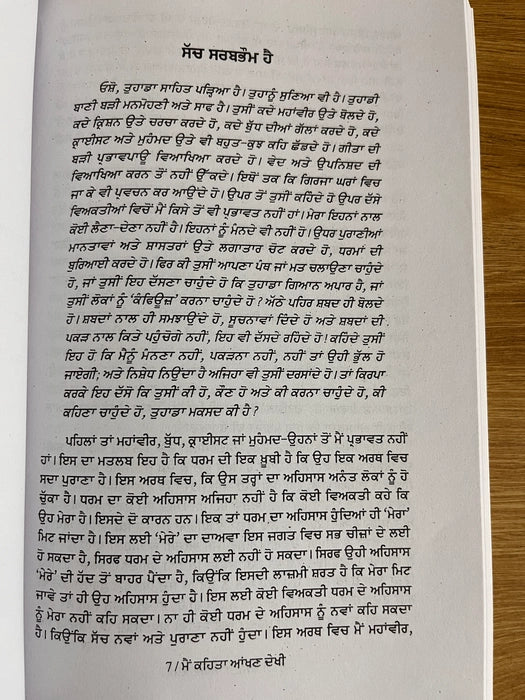
"ਮੈਂ ਕਹਿਤਾ ਆਖਣ ਦੇਖੀ" is Osho's empowering and razor-sharp Punjabi discourses inspired by Kabir's famous doha: "Main kehta aakhan dekhi" – "I speak only what I have seen with my own eyes." Osho explores the courage to trust one's own direct seeing, the rejection of second-hand beliefs, scriptures, and gurus, and the freedom that comes from living and speaking from personal experience rather than borrowed knowledge.
"ਮੈਂ ਕਹਿਤਾ ਆਖਣ ਦੇਖੀ" ਓਸ਼ੋ ਦੀਆਂ ਸਸ਼ਕਤ ਅਤੇ ਤਿੱਖੀਆਂ ਪੰਜਾਬੀ ਗੱਲਬਾਤਾਂ ਹਨ ਜੋ ਕਬੀਰ ਦੇ ਮਸ਼ਹੂਰ ਦੋਹੇ ਉੱਤੇ ਹਨ: "ਮੈਂ ਕਹਿਤਾ ਆਖਣ ਦੇਖੀ" – ਮੈਂ ਉਹੀ ਬੋਲਦਾ ਹਾਂ ਜੋ ਮੈਂ ਆਪਣੀਆਂ ਅੱਖਾਂ ਨਾਲ ਵੇਖਿਆ ਹੈ। ਓਸ਼ੋ ਆਪਣੇ ਅਨੁਭਵ ਉੱਤੇ ਭਰੋਸਾ ਕਰਨ ਦੀ ਹਿੰਮਤ, ਦੂਜਿਆਂ ਦੀ ਸੁਣੀ-ਸੁਣਾਈ ਗੱਲਾਂ, ਗ੍ਰੰਥਾਂ ਅਤੇ ਗੁਰੂਆਂ ਤੋਂ ਇਨਕਾਰ ਅਤੇ ਆਪਣੇ ਅਨੁਭਵ ਤੋਂ ਜੀਣ ਅਤੇ ਬੋਲਣ ਦੀ ਆਜ਼ਾਦੀ ਨੂੰ ਖੋਜਦੇ ਹਨ।
Book Title: ਮੈਂ ਕਹਿਤਾ ਆਖਣ ਦੇਖੀ (Main Kehta Aakhan Dekhi)
Author: Osho
Language: Punjabi (Gurmukhi)
Genre: Spiritual Discourses (ਰੂਹਾਨੀ ਗੱਲਬਾਤ)
Available at: Kalam Kitaab


Main Kehta Aakhan Dekhi Book: Osho's Radical Call to Trust Your Own Eyes
"Main Kehta Aakhan Dekhi book" is one of Osho's most empowering, direct, and liberating series of Punjabi discourses, built around Kabir's revolutionary doha: "Main kehta aakhan dekhi" – "I speak only what I have seen with my own eyes." Osho (1931–1990), the mystic who rejected all forms of second-hand truth and blind faith, uses this single line as a manifesto for authentic living and spiritual seeking. The "Main Kehta Aakhan Dekhi book" is Osho's passionate invitation to drop borrowed beliefs, scriptures, gurus, traditions, and societal conditioning – and to trust your own direct experience ("aakhan dekhi") as the only valid source of truth.
Compiled from live talks (originally in Hindi and translated into Punjabi), this book is deeply loved in Punjab for its resonance with Kabir's spirit of independence and inner seeing. It is a radical call: stop believing what others say – see for yourself, know for yourself, live from your own truth.
Osho's Core Message: "Speak Only What You Have Seen"
Osho in the "Main Kehta Aakhan Dekhi book" declares:
- Second-Hand Truth Is Poison – Scriptures, priests, gurus, parents, society – all give borrowed knowledge. It creates belief, not knowing.
- Aakhan Dekhi – Only Direct Experience Counts – Truth is not heard or read – it is seen, felt, lived. Only your own eyes can reveal it.
- Drop the Intermediary – No book, no master, no doctrine can deliver truth – they can only point. You must walk the path yourself.
- Courage to See – Seeing requires courage – to question everything, to face emptiness, to stand alone without crutches.
- Living from Seeing – When you live from "aakhan dekhi," life becomes authentic – no hypocrisy, no fear, no dependence.
Osho uses Kabir's doha as a sword to cut through centuries of spiritual dependence, urging: "Don't believe me either – see for yourself!"
Key Insights and Discourses in Main Kehta Aakhan Dekhi Book
The Trap of Belief
Osho exposes how belief systems – religious, political, social – keep people blind. Belief is comfortable but false; seeing is risky but true.
Kabir's Rebellion
Kabir refused to accept anything on authority – he saw with his own eyes and spoke only that. Osho celebrates this as the highest courage.
No Intermediary Needed
Osho says: "Between you and truth there is no need of anyone – not even me. Drop all mediators."
Seeing Without Mind
True "aakhan dekhi" happens when mind is silent – in pure witnessing, without interpretation.
Freedom of Direct Knowing
When you know from your own eyes, fear disappears – no one can deceive you, no one can control you.
Osho's Style and Language in the Book
Osho's discourses in the "Main Kehta Aakhan Dekhi book" are sharp, poetic, and empowering – speaking with the authority of one who has seen, yet never imposing belief. The Punjabi translation keeps his directness, humor, and loving provocation, making the talks feel like a friend urging you to open your own eyes.
He mixes Kabir's dohas, Zen stories, Sufi anecdotes, and everyday examples to make the teaching immediate and undeniable.
Spiritual and Cultural Significance of the Book
"Main Kehta Aakhan Dekhi book" resonates deeply in Punjab – land of Kabir, Guru Nanak, and Bulleh Shah – where direct experience ("anubhav") has always been valued over blind faith. It bridges Kabir's radical independence with Osho's modern clarity, inspiring seekers to trust their own inner seeing.
Popular among meditators, Kabir lovers, and those disillusioned with organized religion, it encourages personal truth over borrowed dogma.
Osho's Legacy
Osho spoke extensively on Kabir – calling him the purest voice of rebellion and direct experience. The "Main Kehta Aakhan Dekhi book" captures Osho's deepest respect for Kabir's insistence on "aakhan dekhi" – only speak what you have seen yourself.
His discourses continue empowering people to drop dependence and stand in their own truth.
Why Main Kehta Aakhan Dekhi Resonates Today
In an age of fake news, blind beliefs, and spiritual consumerism, the "Main Kehta Aakhan Dekhi book" by Osho offers radical empowerment: don't believe anyone – not even me. See for yourself. Know for yourself. Live from your own eyes.
This simple yet revolutionary call cuts through all illusion – religious, social, personal – and invites authentic freedom.
Empowering, poetic, and eternally liberating, "Main Kehta Aakhan Dekhi" is essential reading – a fiery reminder that truth is never second-hand; it is always your own seeing.
Direct, fearless, and profoundly awakening, the "Main Kehta Aakhan Dekhi book" affirms Osho's genius in reviving Kabir's call: speak only what you have seen – and live only what you have known.