

Kalam Kitaab
ਪਤਝੜ ਵਿਚ ਪੁੰਗਰਦੇ ਪੱਤੇ (Patjhad vich pungarde patte) Book- Sukhwinder Amrit
ਪਤਝੜ ਵਿਚ ਪੁੰਗਰਦੇ ਪੱਤੇ (Patjhad vich pungarde patte) Book- Sukhwinder Amrit
Couldn't load pickup availability
Share
"ਪਤਝੜ ਵਿਚ ਪੁੰਗਰਦੇ ਪੱਤੇ" ਸੁਖਵਿੰਦਰ ਅੰਮ੍ਰਿਤ ਦਾ ਇੱਕ ਬਹੁਤ ਗਹਿਰਾ, ਰੂਹਾਨੀ ਅਤੇ ਭਾਵੁਕ ਪੰਜਾਬੀ ਕਵਿਤਾ ਸੰਗ੍ਰਹਿ ਹੈ ਜੋ ਜੀਵਨ ਦੇ ਪਤਝੜ (ਝੜ, ਨੁਕਸਾਨ, ਵਿਛੋੜਾ) ਵਿੱਚ ਵੀ ਨਵੀਂ ਉਮੀਦ, ਪੁੰਗਰਨ (ਉੱਗਣਾ, ਜਾਗਰੂਕਤਾ, ਨਵਾਂ ਜਨਮ) ਅਤੇ ਰੂਹਾਨੀ ਤਾਕਤ ਨੂੰ ਬਹੁਤ ਸੰਵੇਦਨਸ਼ੀਲਤਾ ਨਾਲ ਬਿਆਨ ਕਰਦਾ ਹੈ। ਸਿਰਲੇਖ ਇੱਕ ਸ਼ਕਤੀਸ਼ਾਲੀ ਰੂਪਕ ਹੈ – ਜਦੋਂ ਪੱਤੇ ਝੜ ਜਾਂਦੇ ਹਨ ਤਾਂ ਵੀ ਨਵੇਂ ਪੱਤੇ ਪੁੰਗਰਦੇ ਹਨ – ਜੀਵਨ ਦੀ ਅਮਰਤਾ, ਉਮੀਦ ਅਤੇ ਰੂਹਾਨੀ ਨਵੇਂ ਸਿਰੇ ਤੋਂ ਸ਼ੁਰੂਆਤ ਨੂੰ ਦਰਸਾਉਂਦਾ ਹੈ। ਇਹ ਕਵਿਤਾਵਾਂ ਪੰਜਾਬੀ ਮਨ ਦੀ ਅੰਦਰੂਨੀ ਤੜਪ, ਦਰਦ ਵਿੱਚ ਵੀ ਉਮੀਦ ਅਤੇ ਰੱਬੀ ਜੁੜਾਅ ਨੂੰ ਬਹੁਤ ਸੁੰਦਰਤਾ ਨਾਲ ਛੂਹਦੀਆਂ ਹਨ।
"Patjhad Vich Pungarde Patte" by Sukhwinder Amrit is a profoundly spiritual and emotional Punjabi poetry collection that explores rebirth, hope, and inner strength even in the autumn (patjhad) of life – when leaves fall, yet new ones sprout. The title is a powerful metaphor for life's cycles: loss and renewal, pain and resurrection, darkness and emerging light. The poems touch the Punjabi soul's longing, resilience, and divine connection with great tenderness and depth.
The book has recently gained significant popularity after Arjan Dhillon’s song Kavita, which is a poem from this book.
Book Title: ਪਤਝੜ ਵਿਚ ਪੁੰਗਰਦੇ ਪੱਤੇ (Patjhad Vich Pungarde Patte)
Author: ਸੁਖਵਿੰਦਰ ਅੰਮ੍ਰਿਤ (Sukhwinder Amrit)
Language: Punjabi (Gurmukhi)
Genre: Spiritual-Romantic Poetry Collection (ਰੂਹਾਨੀ-ਰੋਮਾਂਟਿਕ ਕਵਿਤਾ ਸੰਗ੍ਰਹਿ)
Published: Recent contemporary Punjabi literature (popular in 2010s–2020s)
Available at: Kalam Kitaab
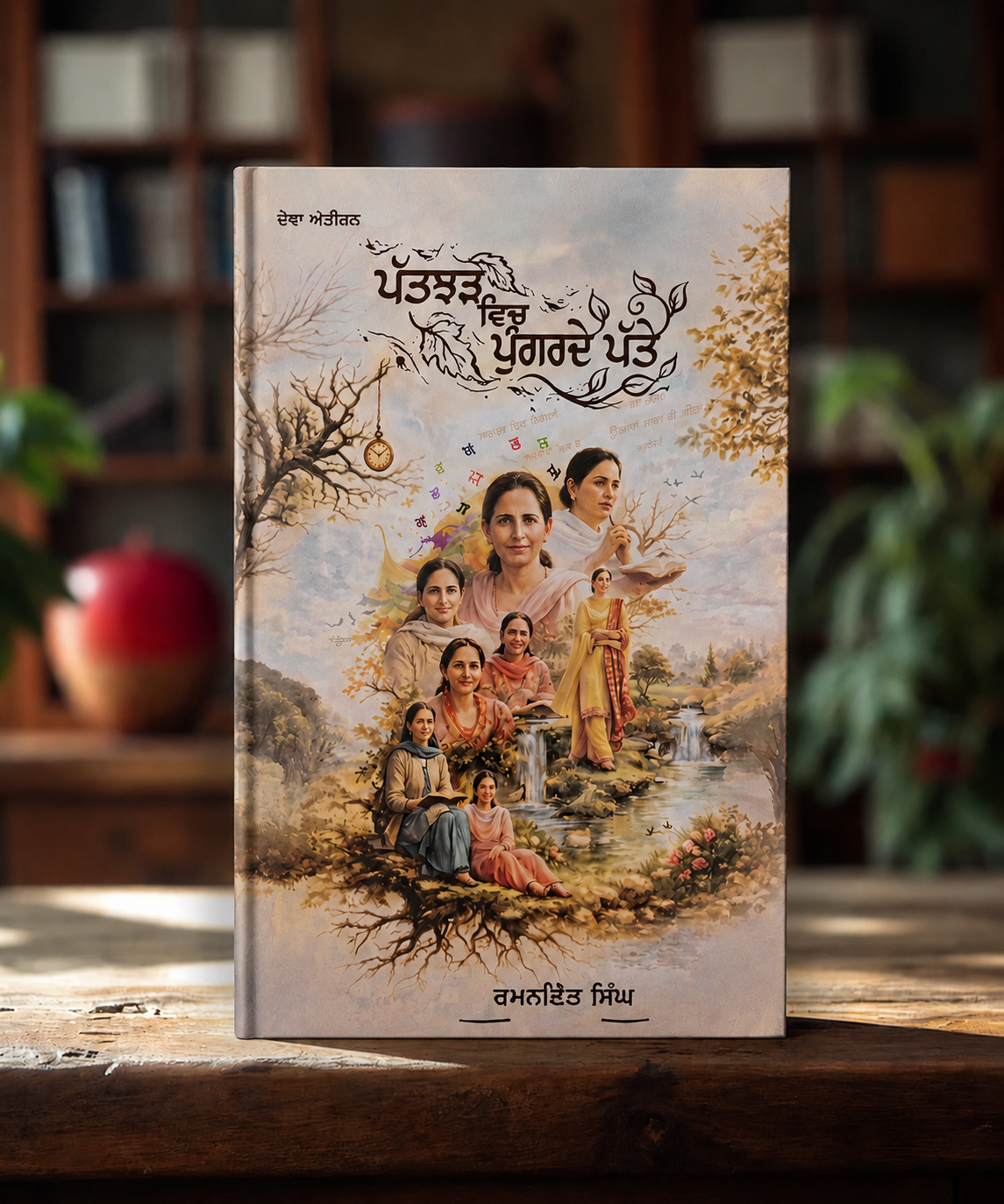
Patjhad Vich Pungarde Patte – A Poetic Journey of Renewal, Inner Strength, and Emotional Grace
Patjhad Vich Pungarde Patte is among the most admired and emotionally resonant poetry collections written by Sukhwinder Amrit, one of the most respected contemporary voices in Punjabi literature. Known for her deeply sensitive poetic expression, spiritual depth, and graceful language, Sukhwinder Amrit has created through this collection a literary space where human emotions are not merely described, but transformed into reflection, healing, and quiet hope.
The title itself carries a profound symbolic meaning. Patjhad refers to autumn — the season when leaves fall, trees appear empty, and nature seems to enter a phase of silence and withdrawal. Yet the phrase Pungarde Patte introduces a contrasting image: even during autumn, fresh leaves begin to emerge. This paradox forms the emotional and philosophical foundation of the book. It suggests that even in periods of loss, endings, emotional fatigue, or inner emptiness, life continues to prepare new beginnings. What appears to be decline often contains hidden renewal.
This central metaphor makes the book deeply relatable across generations. Readers often discover in these poems reflections of their own private struggles — grief, separation, waiting, unanswered emotions, fading relationships, spiritual searching, and the slow rebuilding of hope. Rather than presenting sorrow as darkness alone, Sukhwinder Amrit gently reveals that pain can become a doorway toward deeper awareness and emotional growth.
The Meaning Behind the Title
Autumn as an Inner Season
In this collection, autumn is not treated simply as a natural season but as an emotional state. It represents moments when life feels uncertain, when attachments loosen, when expectations fall away, and when silence becomes more meaningful than speech.
For many readers, this metaphor becomes deeply personal because life itself often passes through similar seasons. There are periods when relationships change, ambitions weaken, memories become heavier, and certainty disappears. Sukhwinder Amrit recognizes these human experiences and gives them poetic shape through images of falling leaves, changing light, and quiet landscapes.
Sprouting Leaves as a Symbol of Hope
The second part of the title introduces the possibility of renewal. Even while leaves fall, new leaves begin to form. This image carries extraordinary emotional power because it does not deny pain; instead, it places hope within pain itself.
The book repeatedly suggests that healing does not arrive suddenly. It begins quietly, often unnoticed, like tiny leaves appearing on branches that still seem bare. This slow emergence mirrors emotional recovery — a process of inner patience rather than dramatic change.
🌿 The reader is reminded that endings are rarely final. Often they prepare the ground for unseen beginnings.
Sukhwinder Amrit’s Unique Poetic Voice
Softness as Strength
One of the most distinctive qualities of Sukhwinder Amrit is her ability to write with softness without losing intensity. Her poems do not rely on loud declarations or dramatic language. Instead, they move with quiet confidence.
This softness becomes a form of strength. A gentle line often carries greater emotional force than direct intensity because it invites reflection rather than reaction.
Her language feels intimate, almost conversational at times, yet deeply literary. It allows readers to enter the poem gradually and remain with its emotional resonance long after reading.
Feminine Sensibility and Emotional Precision
A powerful aspect of this collection is its feminine emotional perspective. The poems often carry the sensitivity of lived experience — not only personal feeling but observation shaped by compassion, restraint, and quiet endurance.
Rather than exaggerating emotion, Sukhwinder Amrit often chooses restraint. This makes the emotional effect stronger because the poems trust silence as much as words.
Musical Flow in Language
Her poetry is often described as lyrical because the language naturally carries rhythm. Even when read silently, the lines feel musical.
This rhythmic quality explains why many readers return repeatedly to her poems — not only for meaning, but for the experience of reading itself.
✨ Her verses often feel like slow-moving prayer, carrying emotional calm.
Themes That Define Patjhad Vich Pungarde Patte
Renewal After Loss
The strongest theme in the collection is renewal. Many poems suggest that emotional loss does not destroy human capacity for growth; it deepens it.
Loss appears in many forms:
- separation
- fading affection
- silence between people
- time passing
- changing relationships
- inner loneliness
Yet none of these become final defeat. Instead, they become stages of transformation.
Acceptance of Life’s Cycles
The collection repeatedly presents life as cyclical rather than linear. Just as seasons return, emotional states also shift.
Autumn is necessary because it creates space.
Falling leaves are not failure; they are preparation.
This perspective offers readers comfort because it allows pain to be understood as part of life’s natural rhythm.
Spiritual Resilience
Many poems carry spiritual undertones without becoming doctrinal. There is trust in unseen order, patience in suffering, and quiet faith that inner light survives difficulty.
This spiritual quality connects the book to broader Punjabi literary traditions influenced by Sikh reflection and Sufi inwardness.
Love Beyond Possession
Love in this collection is often subtle and mature. It is not presented merely as romance but as emotional presence that continues even through absence.
Love becomes:
- memory
- prayer
- waiting
- understanding
- release
This gives the poems emotional depth beyond conventional romantic poetry.
Nature as Emotional Language
Leaves, Trees, Wind, and Light
Nature imagery plays a central role throughout the book.
Leaves are not decorative images; they carry emotional meaning.
Trees often suggest endurance.
Wind suggests movement, memory, or change.
Morning light often suggests clarity after emotional darkness.
Why Nature Feels So Powerful Here
Nature allows difficult emotions to become readable without becoming heavy.
A falling leaf can say what direct language cannot.
A branch can suggest waiting.
A changing sky can express uncertainty.
This poetic method gives the collection extraordinary elegance.
🍂 Nature becomes the emotional vocabulary of the soul.
Connection with Modern Punjabi Readers
Why Young Readers Search for This Book Today
In recent years, Patjhad Vich Pungarde Patte has gained renewed visibility among younger Punjabi readers because of its literary connection with modern Punjabi music.
A major reason for this renewed attention is Arjan Dhillon and the public discussion around his song Kavita.
Many readers seek this book because the emotional atmosphere associated with Kavita has drawn attention toward the poetic world of Sukhwinder Amrit.
Literary Curiosity Created by the Song Kavita
The song created curiosity among listeners who wanted to understand the literary background connected to Punjabi poetry.
As a result, many new readers entered Punjabi literature through this collection.
This is significant because it shows how contemporary Punjabi music can guide audiences back toward literary reading.
🎵 Poetry and song meet here in a meaningful cultural bridge.
Kavita and the Literary Presence of Sukhwinder Amrit
Why Readers Associate Kavita with This Collection
The emotional delicacy, reflective tone, and poetic atmosphere associated with Kavita naturally lead many readers toward Sukhwinder Amrit’s poetry.
Among her collections, Patjhad Vich Pungarde Patte especially attracts attention because it embodies the same inward softness and reflective emotional depth.
Poetry Becoming Accessible Through Music
A remarkable cultural development is that younger audiences who may not regularly read poetry become interested through song references.
This gives the book renewed relevance.
It is no longer read only by established poetry readers but also by listeners exploring literary depth behind contemporary Punjabi expression.
Emotional Healing Through Poetry
Why This Book Comforts Readers
Many readers describe this collection as healing because the poems do not intensify pain; they soften it.
They create emotional space.
They slow the mind.
They encourage inward listening.
Quiet Rather Than Dramatic Healing
The healing offered here is subtle.
There are no dramatic conclusions.
Instead, each poem offers a small emotional shift — a gentler understanding, a calmer perspective, a softer way to carry memory.
🌸 This is why readers often return to the book during emotionally difficult periods.
Cultural Importance in Punjabi Literature
Place Within Contemporary Punjabi Poetry
Sukhwinder Amrit occupies a respected position in modern Punjabi literature because she preserves literary depth while remaining accessible.
Her poems are literary without becoming distant.
This collection particularly demonstrates that balance.
Frequently Shared in Literary Gatherings
Poems from this collection are often quoted in:
- poetry gatherings
- literary discussions
- social media captions
- emotional reflections
- personal writing circles
This continued sharing shows the lasting relevance of the book.
Why Patjhad Vich Pungarde Patte Remains Timeless
A Book for Every Emotional Season
The reason this collection remains timeless is simple: every human life enters autumn.
Everyone experiences:
- endings
- waiting
- emotional fatigue
- uncertainty
- inner rebuilding
Because the poems speak to universal transitions, the book never loses relevance.
Quiet Hope in Difficult Times
Its greatest gift is quiet hope.
Not loud optimism.
Not easy reassurance.
But calm confidence that life continues beneath visible endings.
✨ Even fallen leaves belong to future growth.
Final Reflection
Patjhad Vich Pungarde Patte is far more than a poetry collection; it is a meditative literary experience shaped by tenderness, emotional intelligence, and spiritual calm.
For readers discovering Punjabi poetry through Arjan Dhillon and Kavita, this book becomes an especially meaningful entry into deeper literary tradition.
For established readers, it remains one of Sukhwinder Amrit’s most comforting and beautifully sustained works.
Tender, lyrical, reflective, and quietly luminous, the collection continues to affirm that even in emotional autumn, life does not stop — new leaves are already preparing to emerge 🌿📖✨